Talking Statues of Rome: A Guide to Rome’s Witty Sculptures
Explore the Talking Statues of Rome and discover their history, locations, why they “spoke” and how to visit these silent voices of the city.
The Famous Talking Statues Of Rome
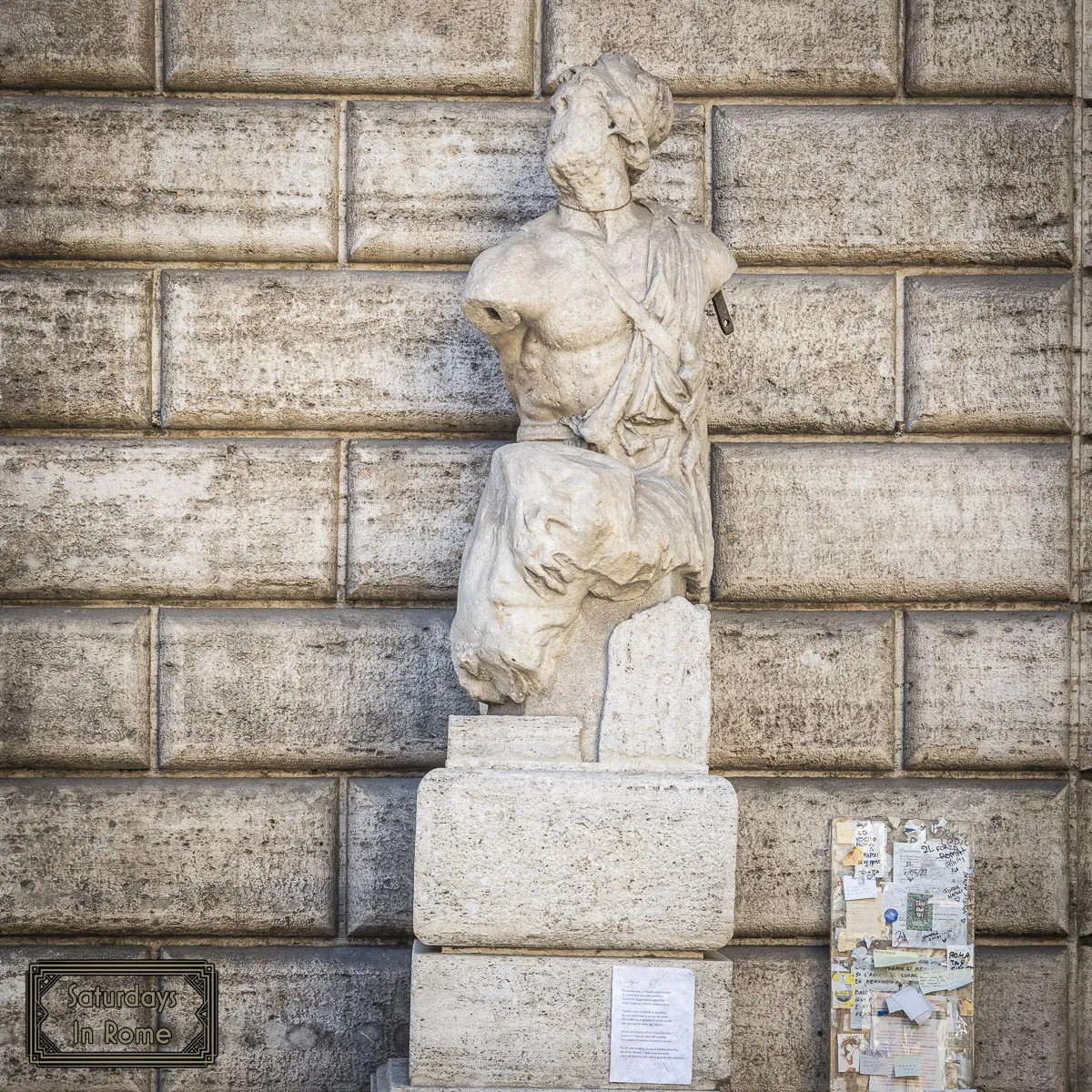
Roman citizens, since the sixteenth century, would post anonymous messages (pasquinades) with a strongly satirical, humorous or provocative tone attributing to the statues the ability to ‘speak’ in the name of ordinary people. The main targets of these protests were the politicians of the day.
Need Help Planning?
- Cheap Flights: Find The Most Affordable Flights.
- Accommodations: From 1 to 5 Stars And More.
- Car Rentals: Affordable Travel Across Italy.
- Sightseeing Tours: Explore Some Amazing Tours.
- Free Itinerary: Your Perfect First 3 Days In Rome
These include affiliate links.
Pasquino Statue
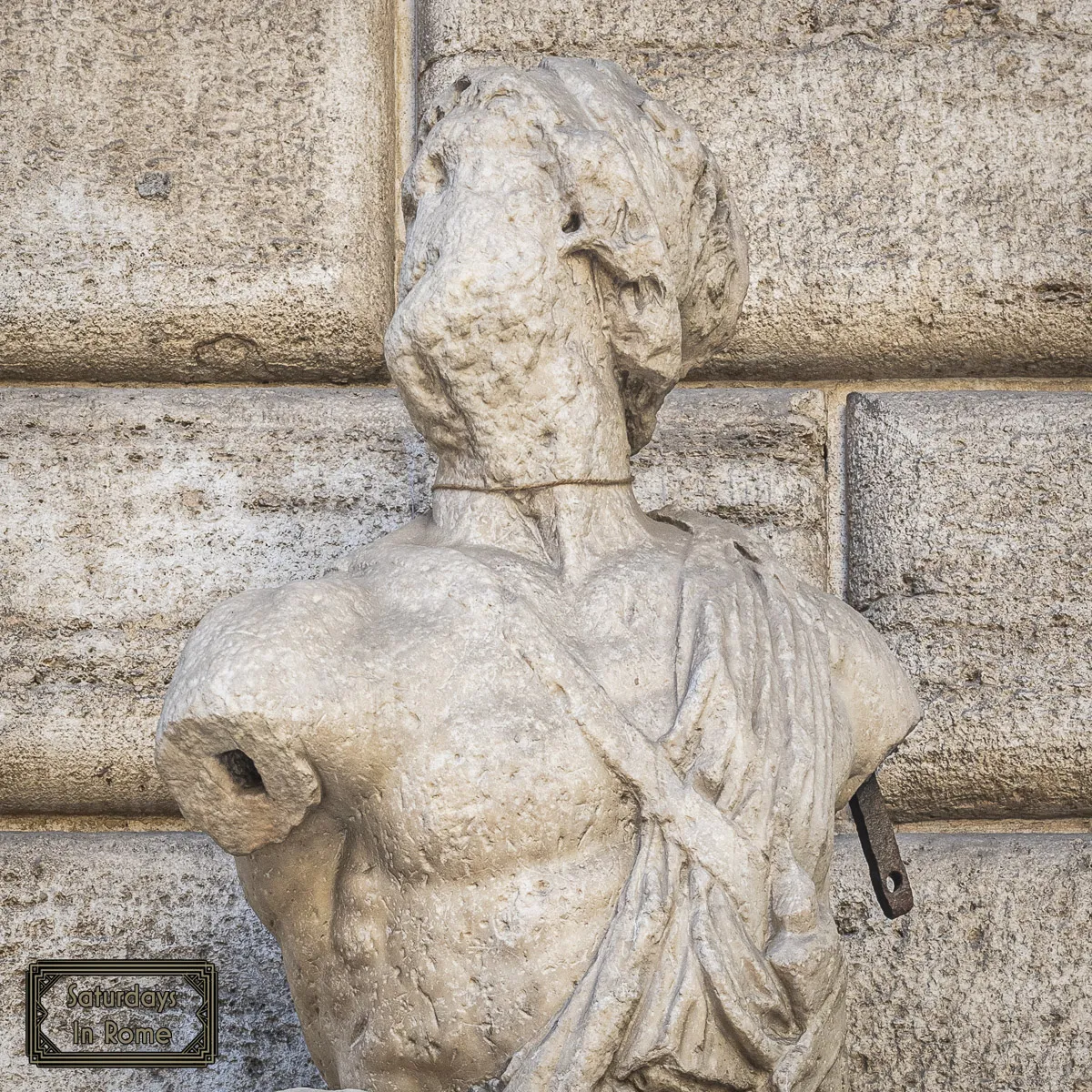
The most famous of these six Rome talking statues is Pasquino, which is from where the word pasquinades is derived. The figure is a man, believed to be representing Menelau, the husband of Helen of Troy. It is located a few steps from Piazza Navona, behind Palazzo Braschi, now known as Pasquino square, and it has been there for more than 500 years.
These political protests, in the form of messages, were hung around the neck of the statue during the night. An example of a popular criticism in the 17th century of Pope Urban VIII Barberini was: ““What the barbarians did not do, the Barberini did”. This type of biting satire continues today as the statue continues to be the display for complaints against Romans.
Marforio Statue
Another of the talking statues of Rome is Marforio. This colossal marble statue of a river god, possibly of Neptune, from 1644 is a true sculptural masterpiece of late Republic / early Empire Rome, found near the Roman Forum.
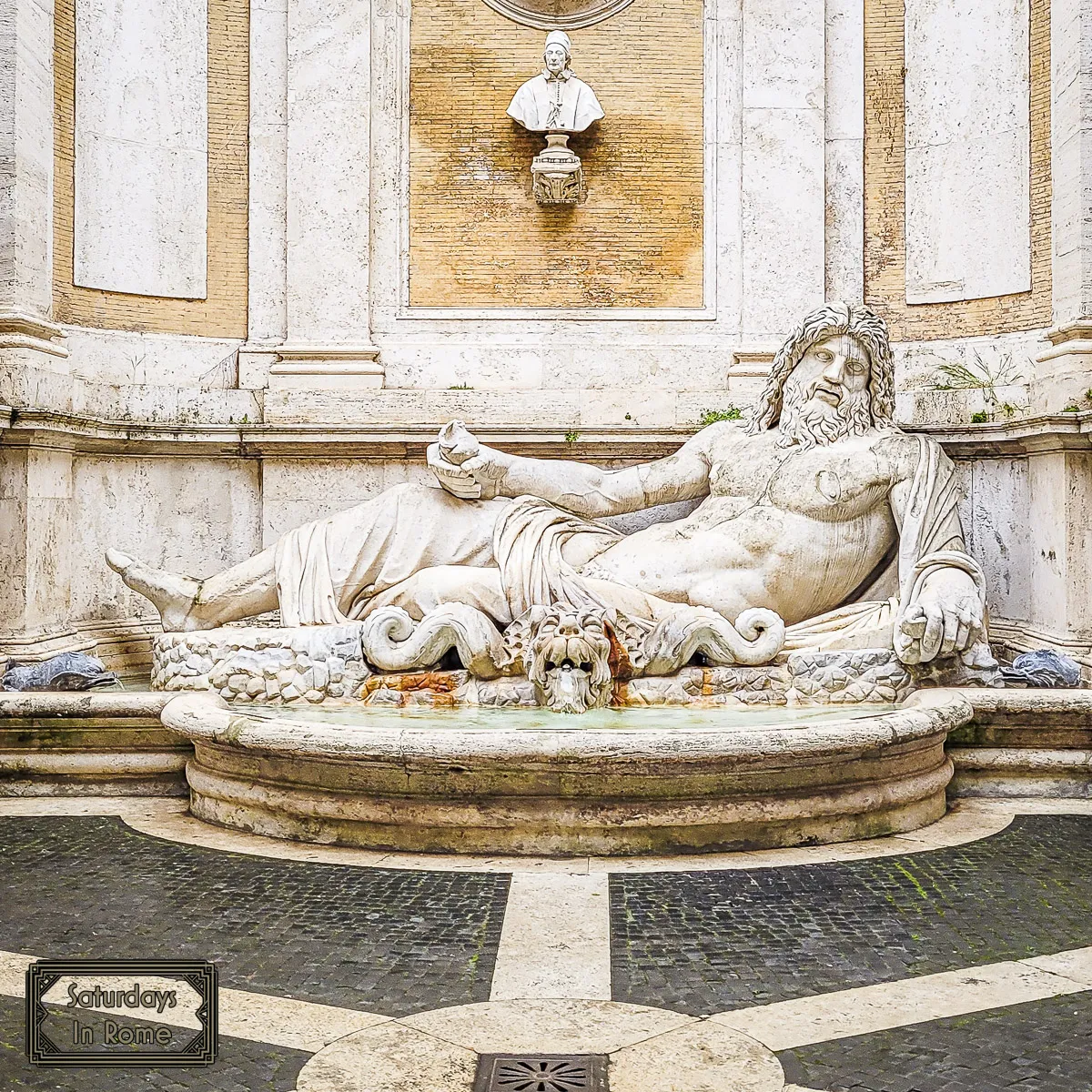
From the sixteenth century onwards it changed position several times. First in Piazza San Marco, then on the Piazza del Campidoglio. Today it is in the Capitoline Museum and the two statues, Pasquino and Marforio, are said to have conversed with each other and responded to each other in tone with sharp jokes.
I became aware of this statue from La Grande Bellezza because it is not only in the movie, but it is used in the advertisement as well. The protagonist, Jep Gambardella, played by Toni Servillo, is sitting on a stone bench with Marforio right behind him. This is a little bit of Cinecittà magic, I think, because there is no bench in front of Marforio in the Capitoline Museum.
Madama Lucrezia Statue
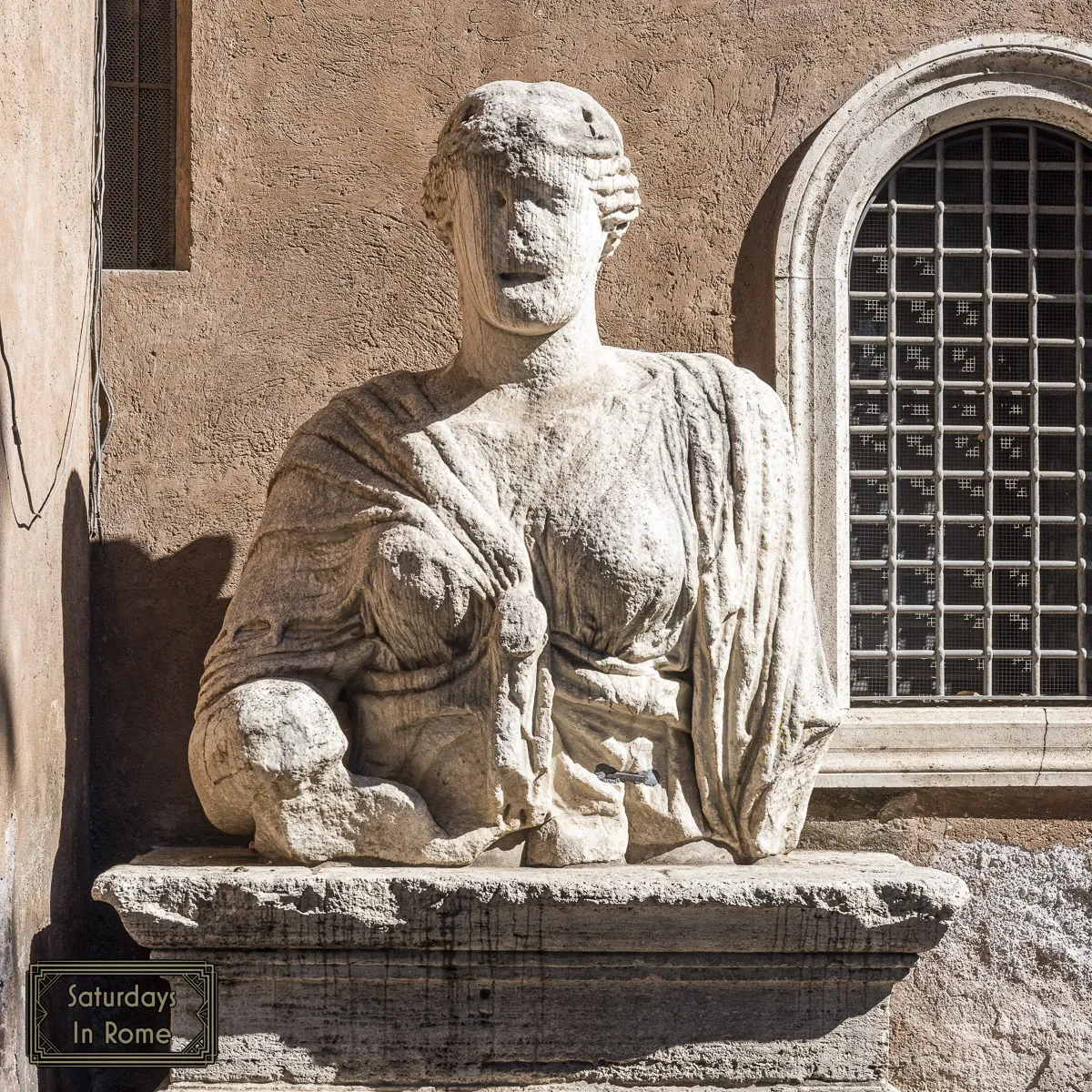
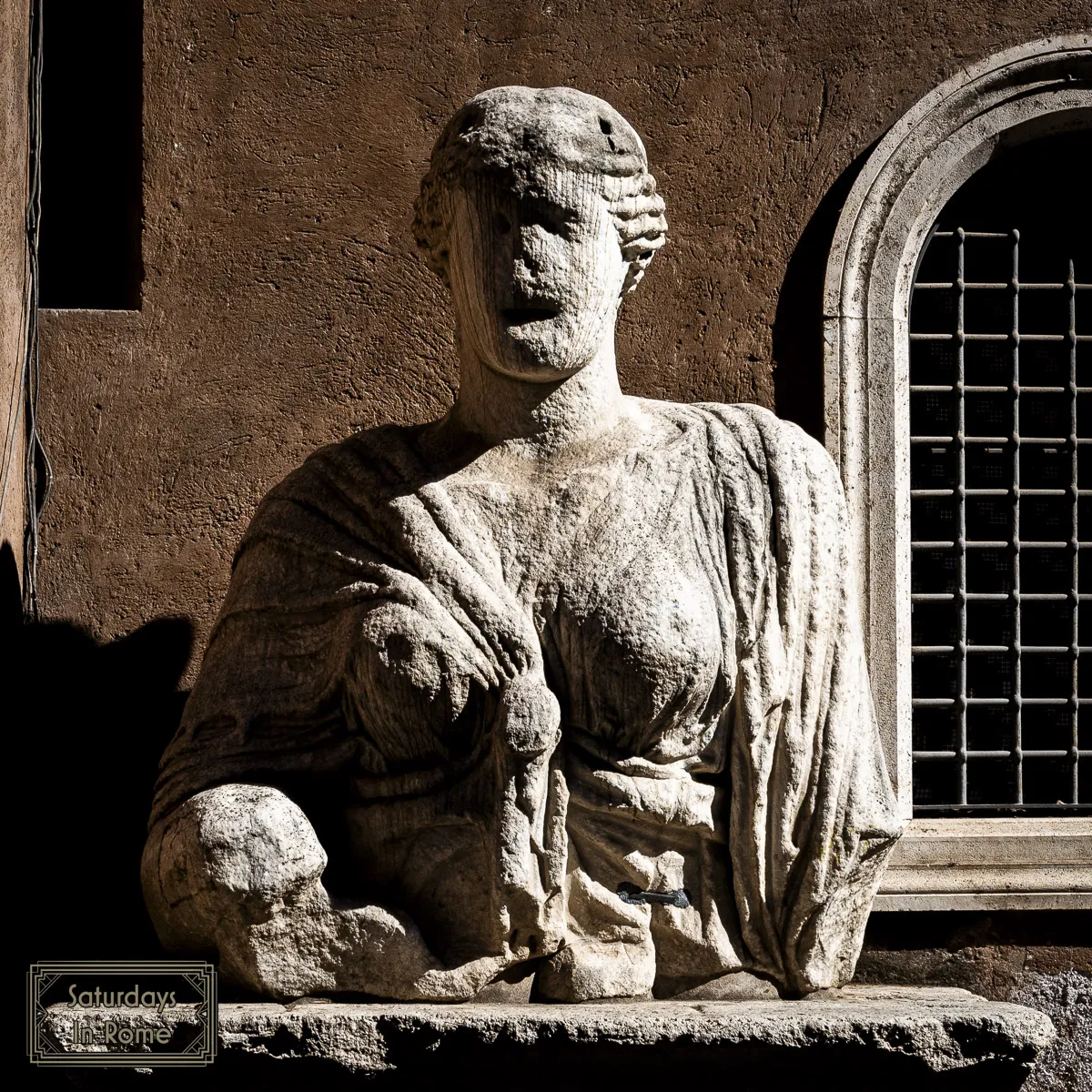
Madam Lucrezia is the only woman amongst the Talking Statues of Rome and lives in Piazza San Marco, which is a tiny piazza right next to Piazza Venezia. You need to really look for it because the statue is in the corner, very close to the end of the #8 tram and easy to miss.
Madama Lucrezia is a gigantic bust of a woman and it may represent the Egyptian goddess Isis or possibly the Roman empress Faustina. It was made of marble and it was so-called because it was a gift to Lucrezia d’Alagno, lover of the king of Naples. During the Roman Republic of 1799, the Roman people in revolt caused Madama Lucrezia to fall to the ground. The next day, on her shoulders, the words “I can’t see anymore” appeared.
Abbot Luigi Statue
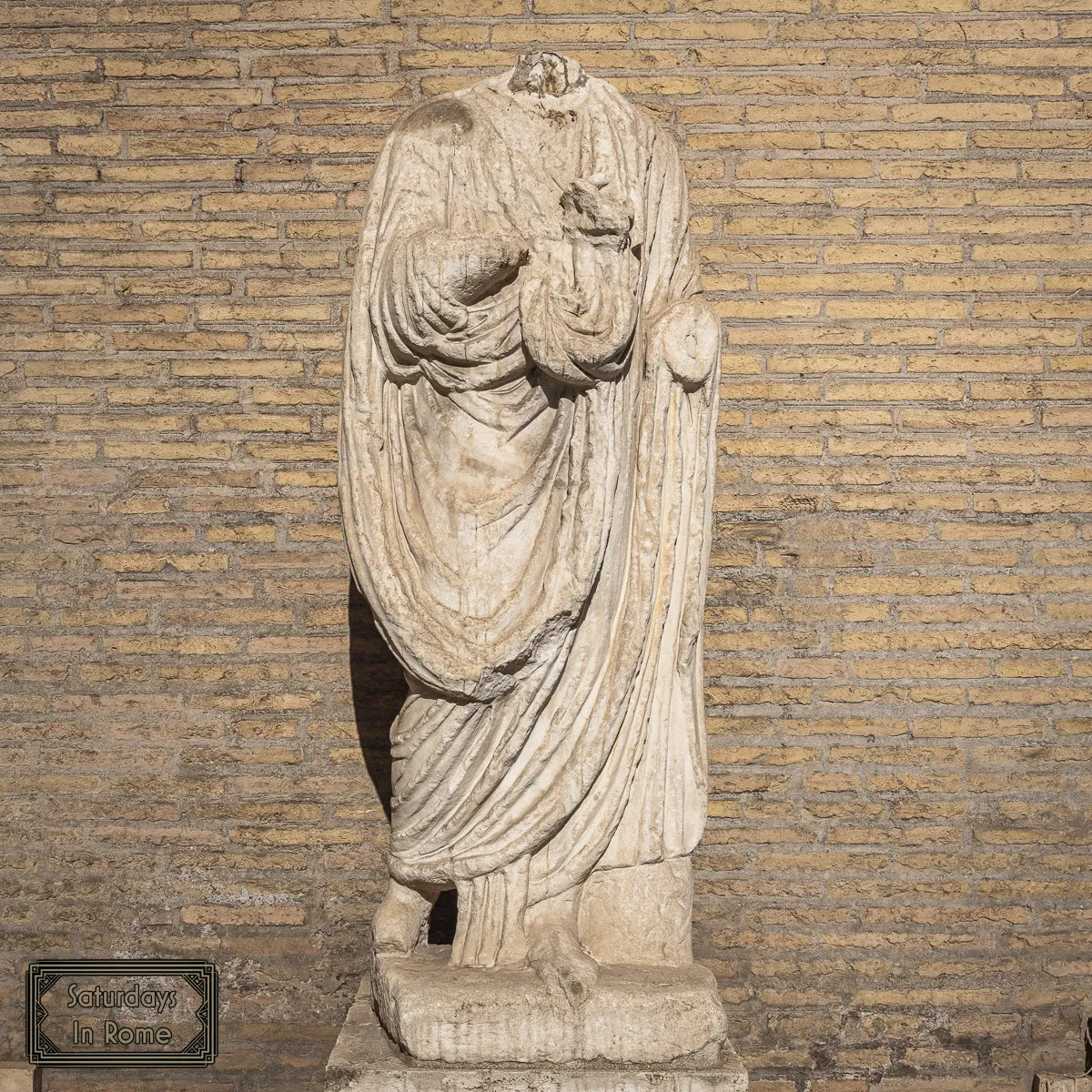
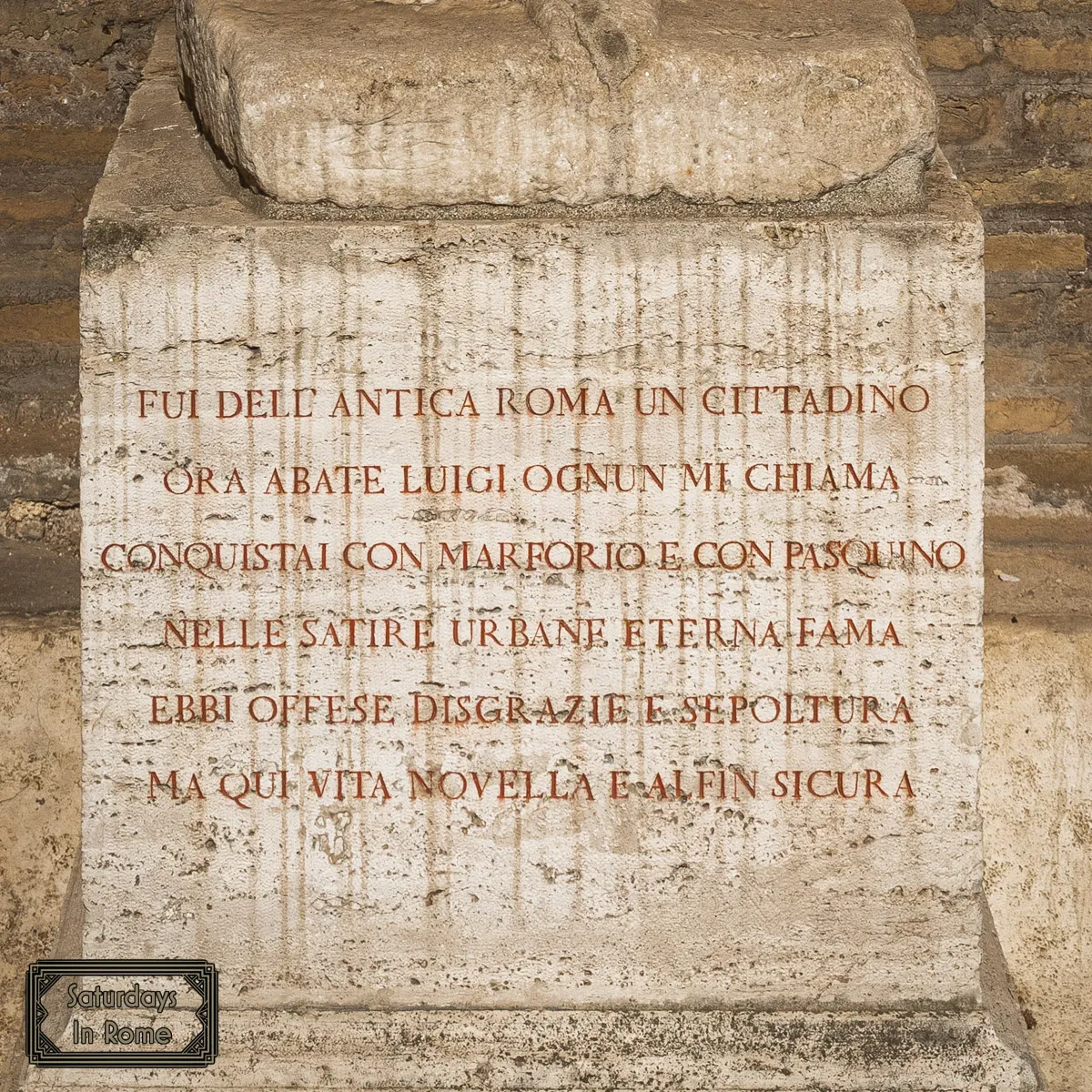
Abbot Luigi stands next to the Basilica of Sant’Andrea della Valle, between Piazza Navona and Largo Argentina. The “Abbate Luiggi”, as the Romans call it, is a late Roman marble statue that depicts a high magistrate. Its base has an inscription that tells the history of being a Talking Statue:
I was a citizen of Ancient Rome
Now all call me Abbot Louis
Along with Marforio and Pasquino I conquer
Eternal fame for Urban Satire
I received offenses, disgrace, and burial,
till here I found new life and finally safety
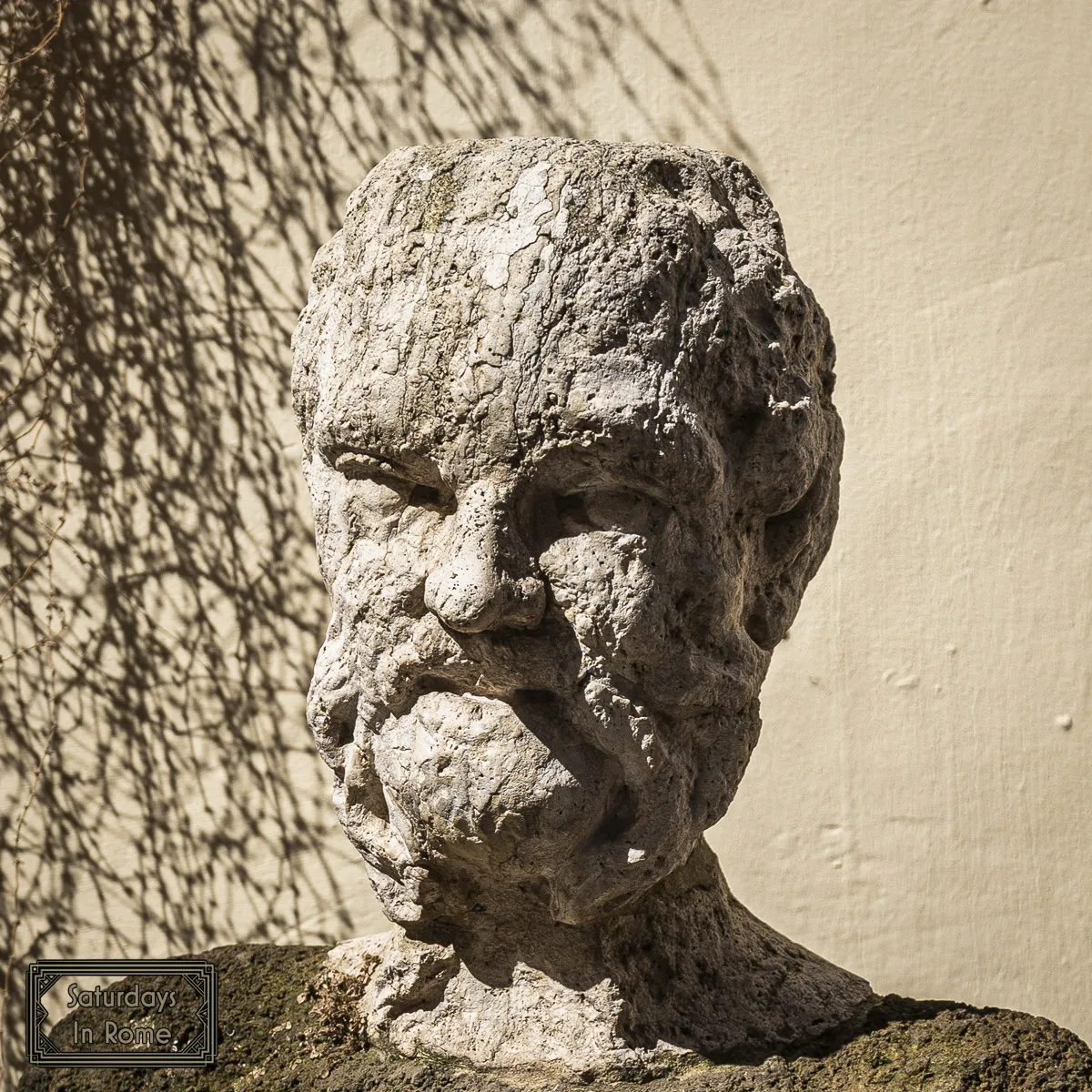
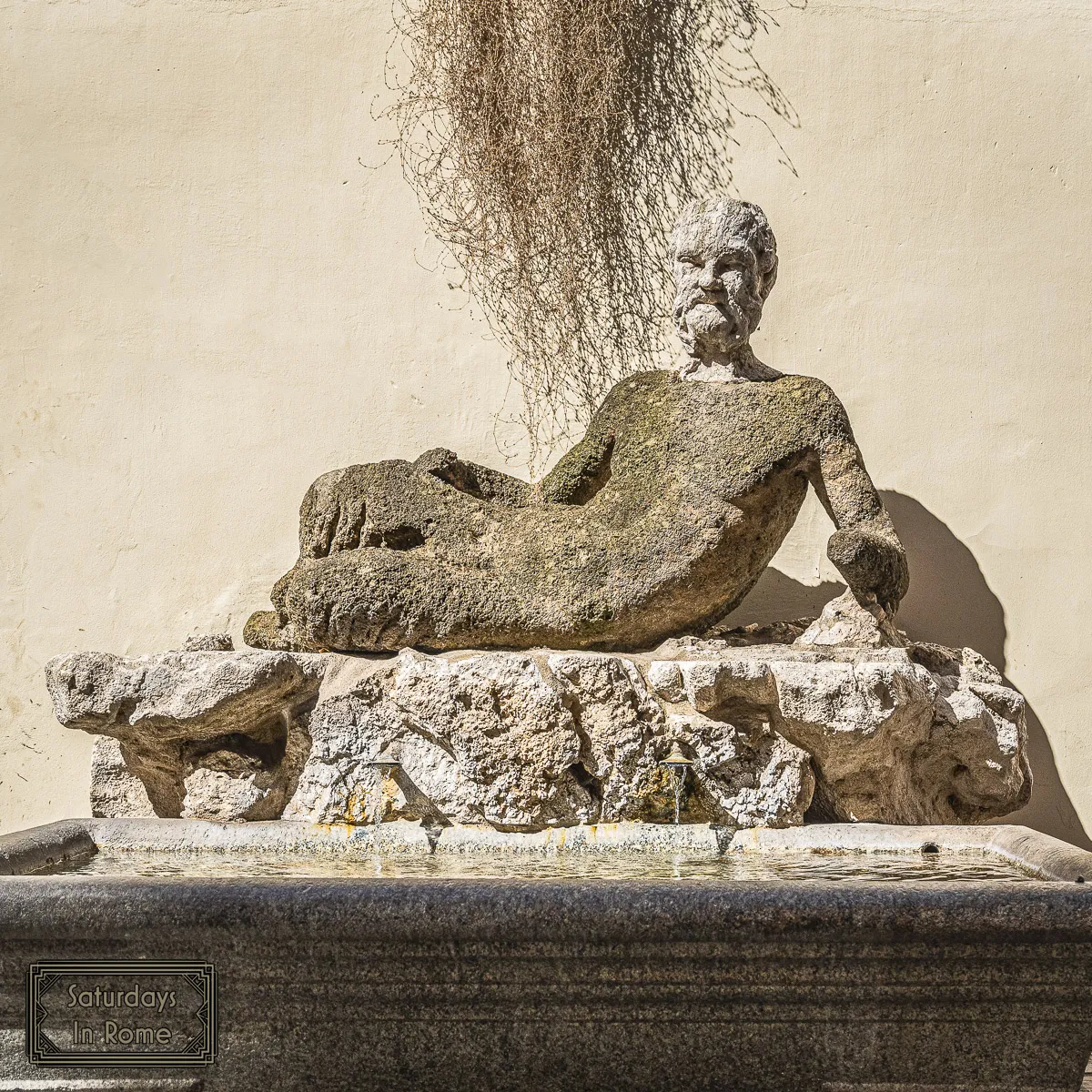
Il Babuino Statue
Il Babuino is one of the two famous Rome statues that is a fountain. It talks in front of the Canova Tadolini Museum, in via del Babuino. The statue is a depiction of Silenus while reclining and overlooking a basin. He is a character in Roman mythology, half man, half goat.
The people of Rome christened the figure “babuino” because they considered it ugly and deformed, like a baboon, and the street was nicknamed the “via del Babuino” as a result, the name eventually becoming the official one.
Il Facchino Statue
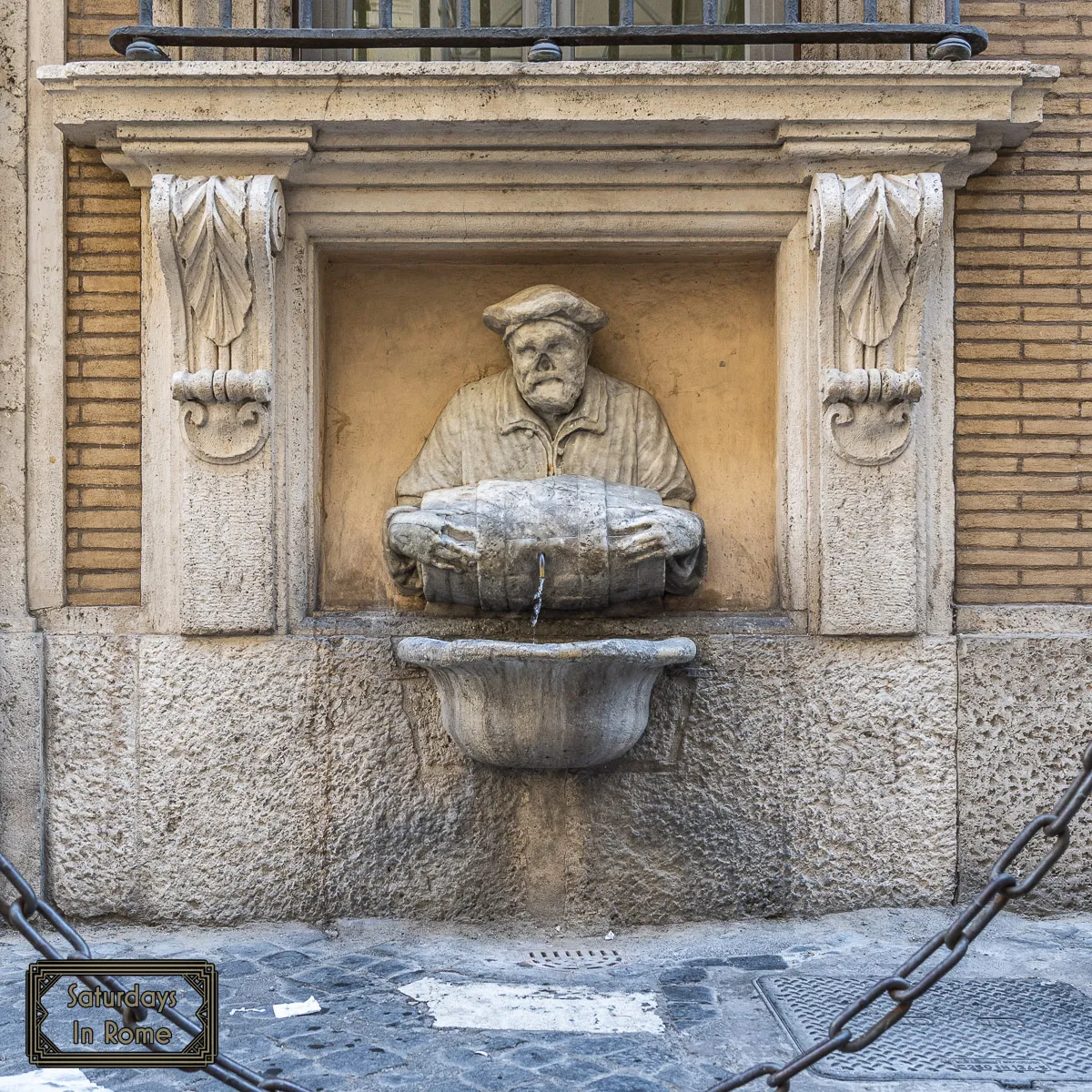
As compared to the other Rome Talking Statues, Il Facchino is fairly new. It was created around 1580 and it depicts a man wearing a cap and carrying a barrel of water from the Tiber.
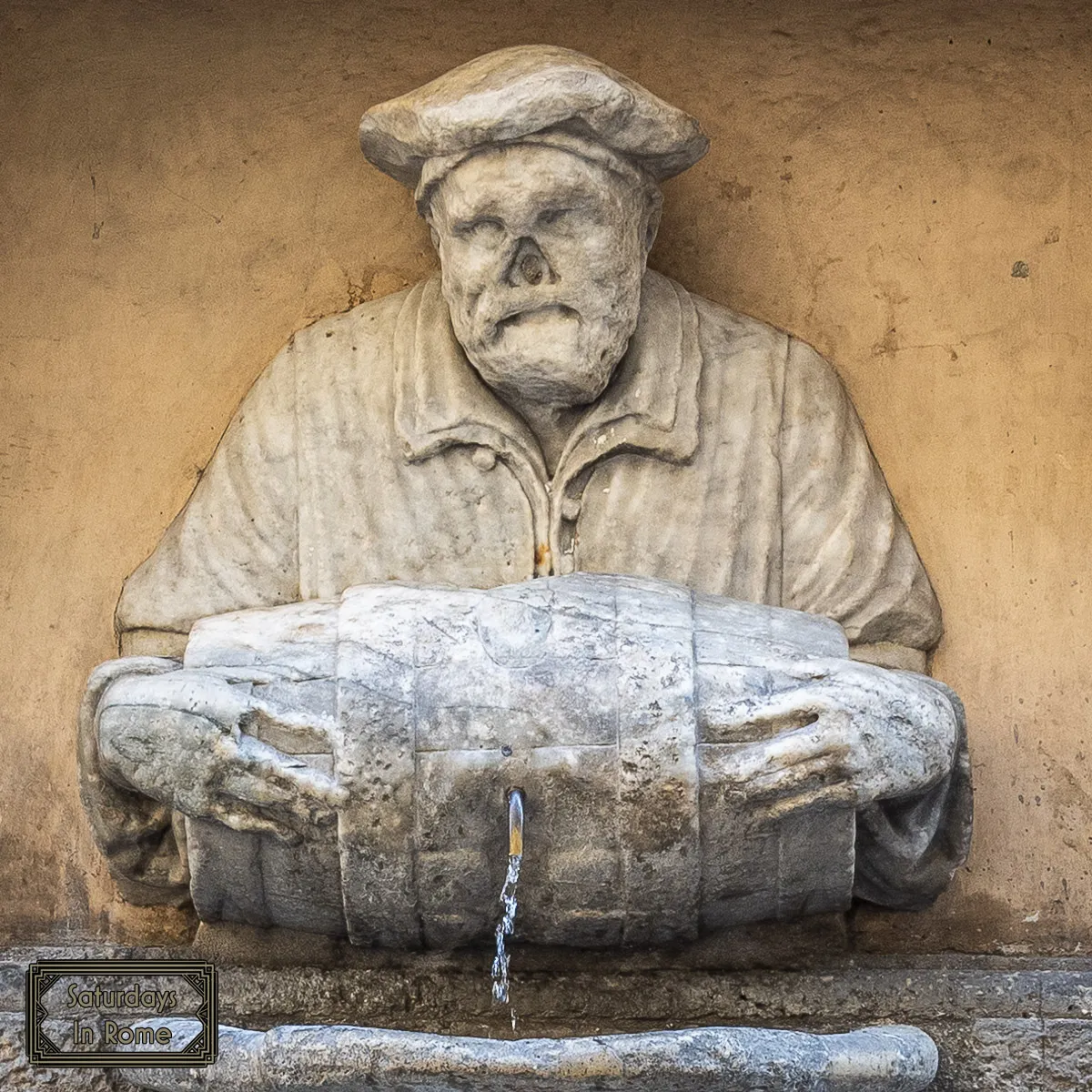
NOT Martin Luther So Don’t Throw Stones!
It is located today in via Lata, a side street of via del Corso and it is damaged from years of people throwing paving stones at his face because people thought the figure represented Martin Luther, who in 1511 stayed in the nearby monastery of the Augustinians.
Frequently Asked Questions About The Talking Statues of Rome
These statues are all within walking distance of each other and make for a great afternoon of hunting for them. Here are some popular questions people have asked about the Talking Statues of Rome:
- What Are The Talking Statues Of Rome And Why Are They Called “Talking”? – The Talking Statues of Rome are a group of six ancient sculptures that became famous in the 16th century for “speaking” through the public’s written satire. Citizens would anonymously attach witty verses and political criticisms—called pasquinades—to these statues, giving them a “voice” to mock authority and comment on social issues.
- How Many Talking Statues Are There In Rome And What Are Their Names? – There are six Talking Statues of Rome: Pasquino, Marforio, Madama Lucrezia, Abate Luigi, Il Facchino, and Il Babuino. Each statue had its own personality and was part of a public dialogue through posted messages exchanged between them.
- Where Can You Find Each Of The Talking Statues Of Rome? – You can find the Talking Statues of Rome throughout the historic center:
- Pasquino near Piazza Navona
- Marforio at the Capitoline Museums
- Madama Lucrezia in Piazza San Marco near the Capitoline Hill
- Abate Luigi near Piazza Vidoni
- Il Facchino on Via Lata near Via del Corso
- Il Babuino on Via del Babuino, close to Piazza di Spagna
- What Is A “Pasquinade” And How Does It Relate To The Talking Statues Of Rome? – A pasquinade is a short, satirical poem or message directed at political or social figures. The tradition began with Pasquino, the most famous of the Talking Statues of Rome. Romans would attach these writings to his base at night, allowing the statue to “speak” publicly against corruption or papal excesses.
- When Did The Tradition Of Posting Satirical Verses On The Talking Statues Begin? – The tradition began in the early 1500s, during the Renaissance, when freedom of speech was limited in Papal Rome. Citizens used the statues as anonymous outlets for criticism, with Pasquino becoming the original and most vocal “talker” among them.
- Why Were The Talking Statues Important In Papal Rome And For Political Commentary? – The Talking Statues of Rome offered a rare and creative form of free expression during times of censorship. They acted as an informal press, allowing citizens to criticize the government and the Church without revealing their identities—making them an early form of social media in stone.
- Are The Talking Statues Of Rome Original Ancient Sculptures Or Later Replicas? – Most of the Talking Statues are ancient Roman or classical sculptures that were rediscovered during the Renaissance. Their physical forms predate the “talking” tradition, but their new cultural role began when Romans turned them into vehicles for public satire and protest.
- Can Visitors Still Post Or Read Satirical Notes At The Talking Statues Of Rome Today? – Yes, though the practice is largely symbolic today. At Pasquino, visitors can still see new notes occasionally attached to the statue’s base, continuing the centuries-old custom. Many of these are modern reflections on politics, art, or Roman life.
- What Are Some Of The Most Famous Stories Or Verses Associated With The Talking Statues Of Rome? – Famous pasquinades mocked powerful popes and politicians, often with biting humor. For example, during papal scandals, Pasquino would “speak” lines like “Quod non fecerunt barbari, fecerunt Barberini” (“What the barbarians did not do, the Barberini did”), criticizing Pope Urban VIII’s family for stripping bronze from the Pantheon.
- How Can You Include The Talking Statues Of Rome In A Self-Guided Walking Tour? – You can create a self-guided Talking Statues walking tour beginning at Piazza Navona (Pasquino) and ending near Piazza di Spagna (Il Babuino). Along the way, you’ll pass major landmarks, fountains, and squares, making it a fascinating cultural route through historic Rome that combines art, humor, and history.
These Famous Rome Statues Are Great!
This fun bit of Roman History might not be the first famous Rome statues you go out to see, but if you are aware of them and see these old and mostly decrepit statues during your outings, you’ll be happy to know that little bit of backstory. For more information on the sites of Rome and Italy, check out these posts:
- Ancient Sites In Rome – Exploring the Most Important Sites.
- Is It Worth Visiting Castel Sant’Angelo In Rome?
- The Tiber River In Rome – History, Facts And Optimism.
- The Oldest Pharmacy In Rome Served Popes And The People.
- The Spanish Steps Flowers Are A Sure Sign Of Spring In Rome.
- The Aurelian Walls In Rome Are Ready For Climbing.
- Trajan’s Market Is Where Ancient Romans Loved To Shop.
- Piazza del Popolo Rome – The Beauty And The History.
- The Largo di Torre Argentina Exhibit Is More Up Close.
- The Ancient Circus Maximus In Rome Is Worth Seeing.
- Why Is The Roman Forum Important Still To This Day?
- The Palatine Hill In Rome, Italy – This Is Your Guide.
- The Thermal Baths Of Diocletian In Rome Shouldn’t Be Missed.
- The Forum of Augustus.
- Piazza di Spagna, Rome and the Spanish Steps Are Beautiful!
- Caracalla’s Ancient Roman Baths In Rome Are Worth A Visit.
- Largo Di Torre Argentina Rome Is A Sanctuary In The Ruins.
- Piazza Vittorio Emanuele II Has Mystic Treasures And Movies.
- Nero’s Golden Palace Is An Underground Trip Through History.
- The Ponte Sant’Angelo Statues Line A Beautiful Bridge.