The Seven Pilgrim Churches Of Rome Are A Way To Connect
The seven pilgrim churches of Rome offer a way for Catholics visiting the city to take part in the tradition of visiting the churches as a way to connect.
What Are The Seven Pilgrim Churches Of Rome?
The tradition of visiting all seven churches was started back in the 16th century in order to combine conviviality and the sharing of a common religious experience through the discovery of the history of the early Saints. In the beginning, a few friends and acquaintances would gather before dawn and set out on their walk.
Want to actually walk this pilgrimage without getting lost or missing what matters? Our Seven Pilgrim Churches Guide packs everything above into one portable PDF — dress codes, bus routes, and a full map. Get it here →
At each church, there would be prayer, hymn singing, lunch breaks and a brief sermon. The path covers twelve miles in Rome, but if you aren’t interested in walking that far, public transportation and taxis can make the journey that much easier.
The Seven Churches Visitation is a Roman Catholic tradition to visit seven churches on the evening of Maundy Thursday during Lent, but it is also done on Wednesday of Holy Week. During the Seven Churches Visitation, the faithful visit several churches to pray before the Blessed Sacrament in each church. Depending on the timing, you might encounter church services that you can either attend or wait until they are finished, before you can have a detailed tour of the church.
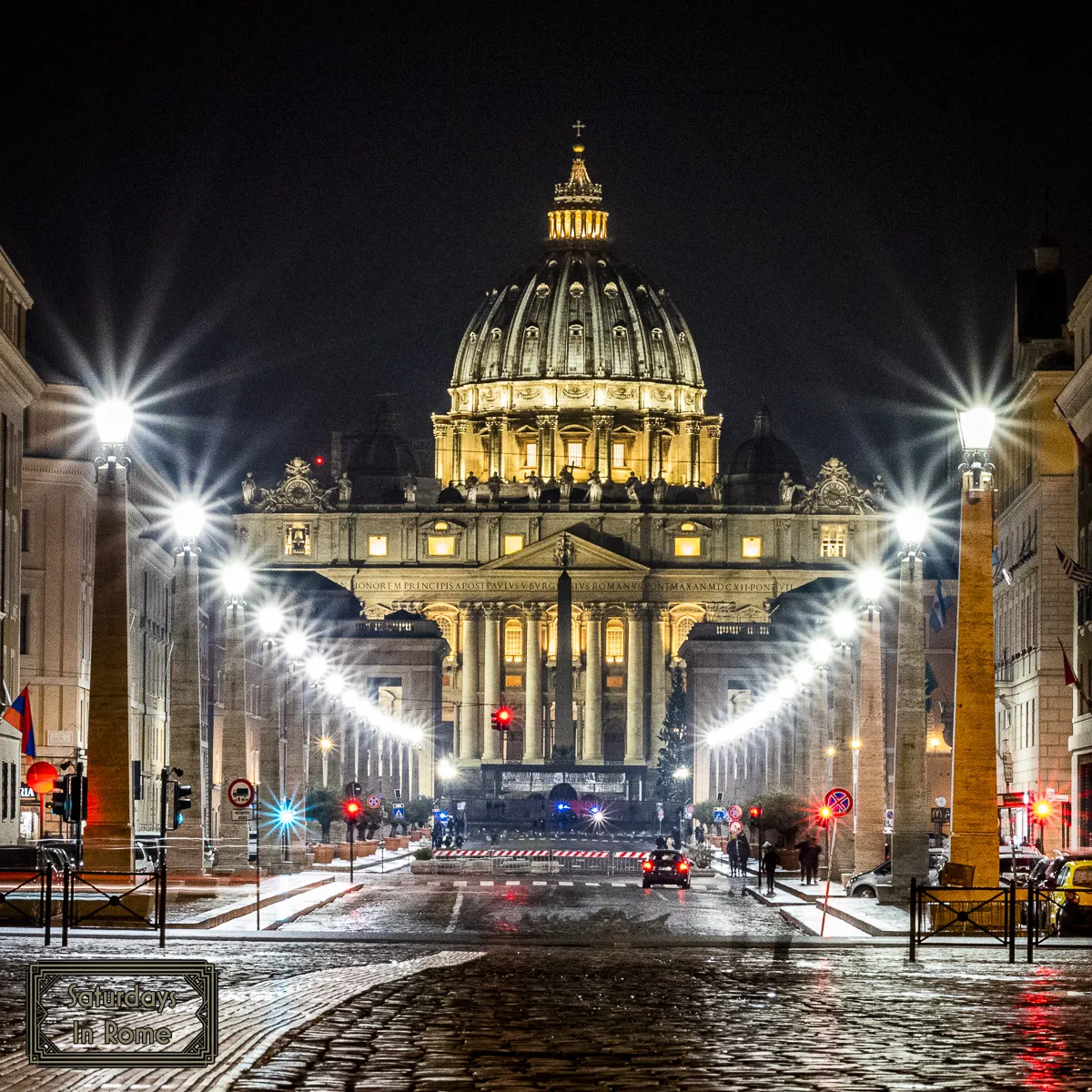
The Vatican And St. Peter’s Basilica
Saint Peter’s Basilica is the largest church in the world, and the most important one in the Catholic world. It unites the religious faithful and lovers of art and is a major pilgrimage site for the Catholic faithful. It frequently draws crowds of tens of thousands, both in the basilica and its adjoining St. Peter’s Square, which are used for a number of masses and celebrations during the year that are presided over by the pope.
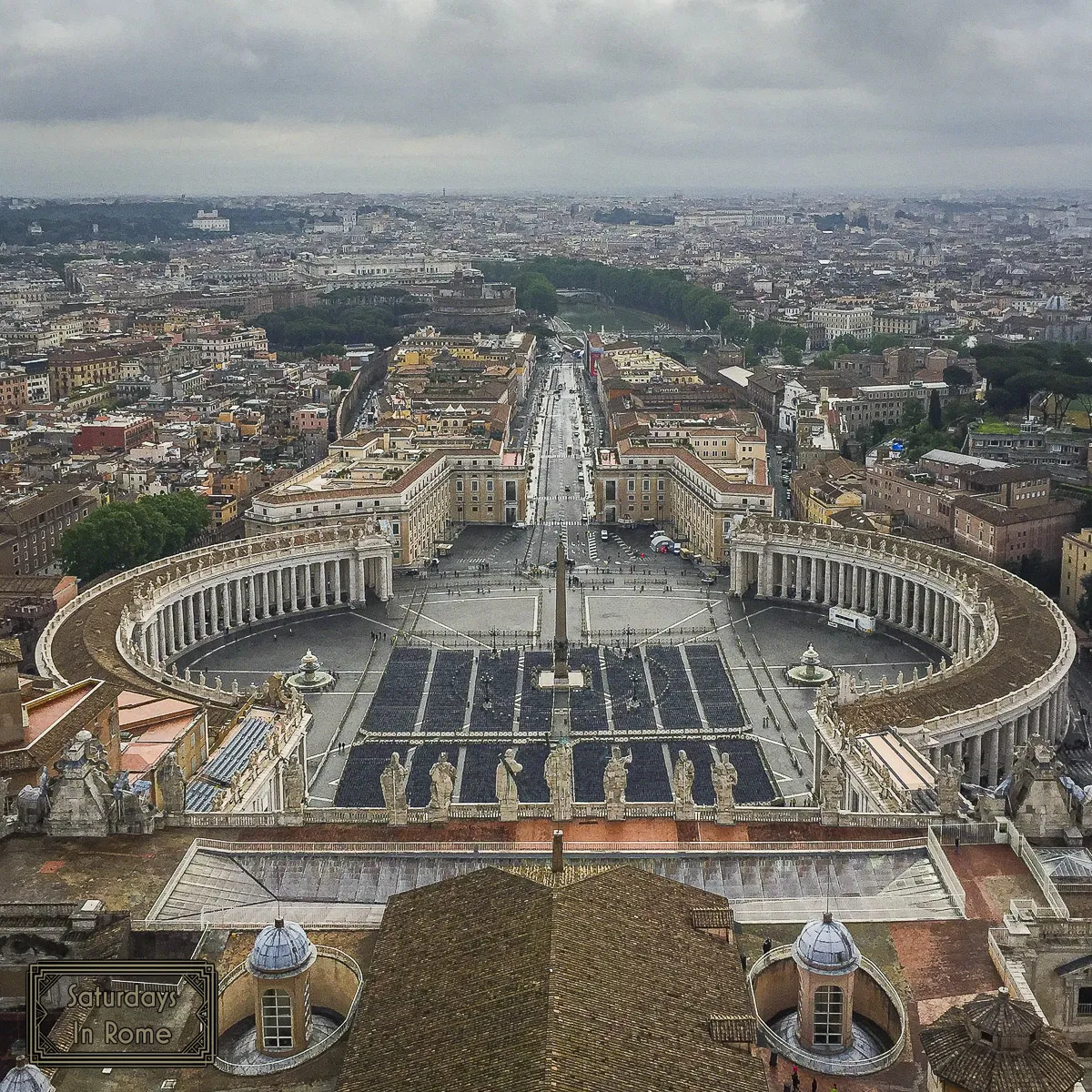
St. Peter’s Basilica is free to enter and open everyday, from April to September from 7:00 am to 7:00 pm, and from October to March from 7:00 am to 6:30 pm.
The Vatican City Basilica Cupola
Climbing the Cupola, as seen in La Dolce Vita, is something that shouldn’t be missed if you can handle cramped spaces and a lot of stairs, because the views are amazing.
Visiting The Vatican
There is what seems like an unlimited number of tour operators selling tours online which is a testament to the popularity and importance of the Basilica. It is free to enter the Basilica, but the lines are unimaginable, so you need to get there early, or better yet, off-season.
I recommend that you purchase audio tours of the Basilica or simply download the Rick Steves app, which contains tours of the Sistine Chapel, St. Peter’s Basilica and the Vatican Museums. These tours will help get a handle on all of the beautiful artwork and architecture throughout the Basilica.
The Papal Archbasilica Of Saint John in Lateran
This Catholic church in Rome goes my many names: Archbasilica Cathedral of the Most Holy Savior and of Saints John the Baptist and John the Evangelist in the Lateran (Arcibasilica del Santissimo Salvatore e dei Santi Giovanni Battista ed Evangelista in Laterano), the Papal Archbasilica of Saint John in Lateran (Arcibasilica Pontificia di San Giovanni in Laterano), Saint John Lateran (San Giovanni Laterano), or the Lateran Basilica (Basilica Lateranense).
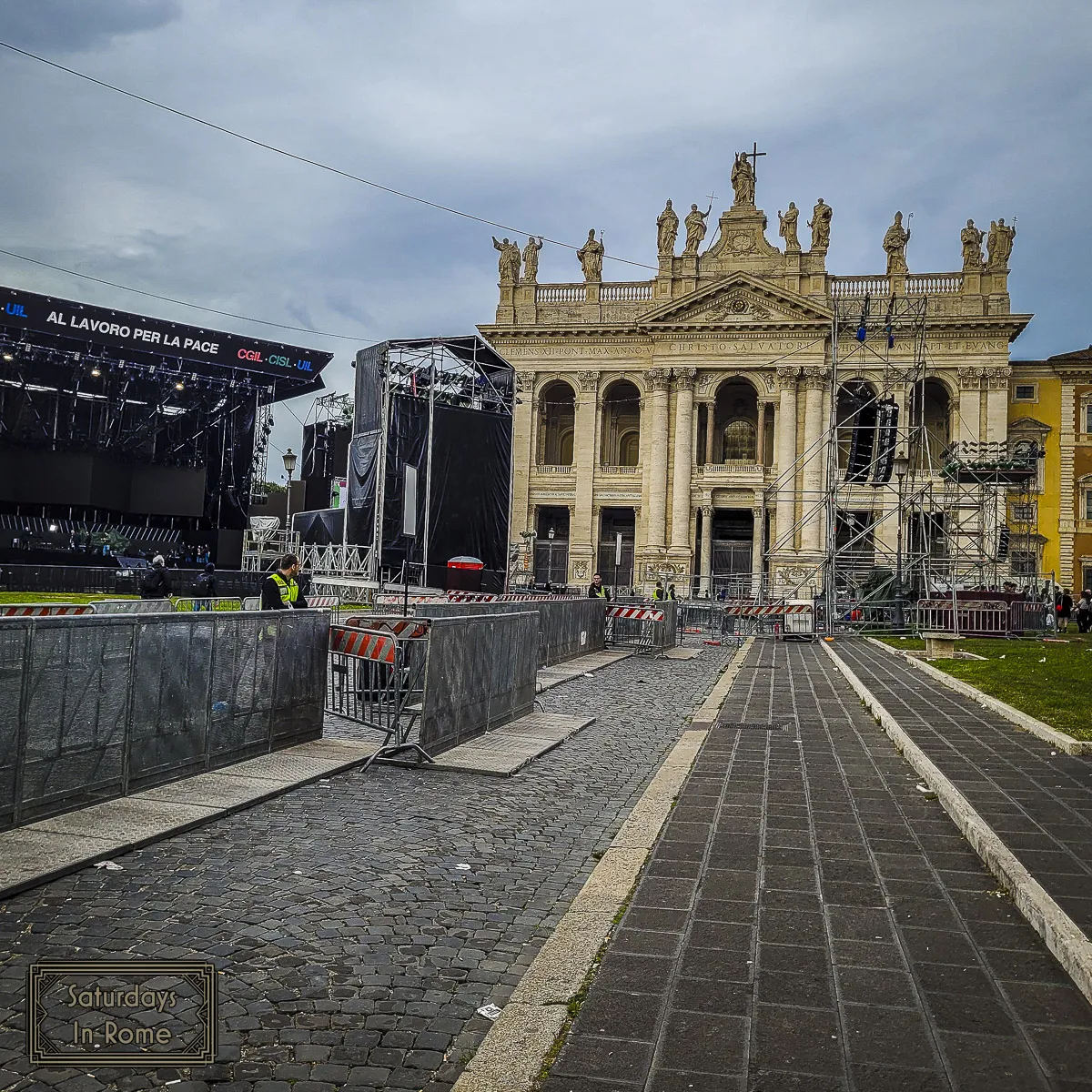
This cathedral church, which is part of the Diocese of Rome, serves as the seat (think: headquarters) of the bishop of Rome, also known as The Pope. This Rome church is outside of Vatican City, however, as properties of the Vatican, the church and its offices have a unique status from Italy, pursuant to the terms of the Lateran Treaty of 1929. In short, From the time that the country was unified in 1861 until the signing of The Lateran Treaty between the Holy See (i.e. Vatican) and the Kingdom of Italy, the situation was unclear and the influence the Vatican had over some or all of Italy was referred to as the “Roman Question”
The Restoration Of San Giovanni In Laterano
The Basilica was founded in 324, it is the oldest public church in the city of Rome. Over the centuries, the church has survived several fires and an earthquake in 897. It still maintains its original form despite being reconstructed several times.
The building deteriorated during the Middle Ages and was badly damaged by two fires in the 14th century, but it was rebuilt in the late 16th century during the reign of Pope Sixtus V. The new structure’s interior was renovated in the late 17th century, and its façade was completed in 1735 under Pope Clement XII.
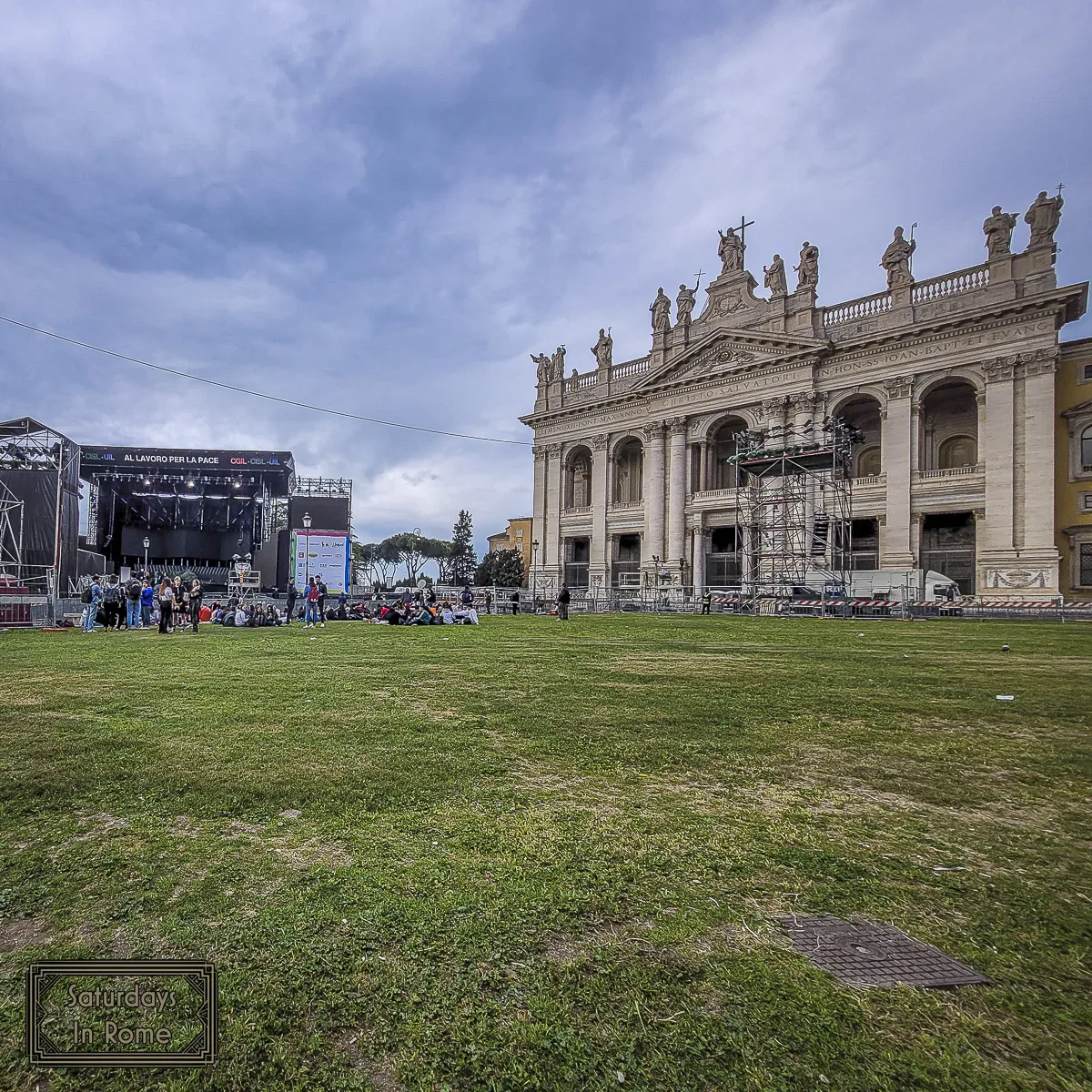
The Lateran Palace
The church, which is the oldest church in Europe, stands on the remains of a fort built by Spetimus Severus (not Snape) in 193 AD and after it was razed, and it was handed over by Constantine I to the Bishop of Rome, who converted the building from a palace that honored the wife of Constantine I, into a temple during the fourth century.
The Basilica of St. John Lateran continues to have an important role in history. All popes were enthroned in this church up until 1870. Today, Basilica di San Giovanni in Laterano is where the Pope, as Bishop of Rome, celebrates Holy Thursday Mass.
What Is In The Neighborhood Of San Giovanni
This area of Rome is less touristy as compared to the area around the Vatican. From a religious perspective, the other major part of the Pilgrim Trail is right across the street from the basilica, and those are the Holy Stairs (Scala Sancta). These are so important that I will soon be having a separate post solely on this topic, but the quick version is that these are thought to be the stairs that Jesus climbed on his way to his trial during his Passion. Again, more on this later.
Not far from the basilica you can visit other monuments and churches. Among these: the Basilica of Santa Croce in Gerusalemme, which is mentioned above as one of the seven pilgrim churches in Rome and houses the relics of the Cross brought to Rome by Saint Helena. Somewhat less religious but very tranquil is Villa Celimontana, a lovely green space near the Colosseum and an ideal place for outdoor breakfasts and walks; the Basilica of San Clemente. The church of Santo Stefano Rotondo is also very close, albeit a bit hidden.
San Giovanni Cultural Relevance
Although less of a tourist site and more of a cultural touchpoint, the neighborhood is connected to two of the most popular and influential Italian actors ever to grace the screen. The great actor Alberto Sordi, while born in Trastevere, has a museum in the area whose purpose is to take care of his important legacy and keep the memory of Alberto Sordi alive. Similarly, Marcello Mastroianni grew up in the San Giovanni district, although he was born outside of Rome in the Apennine Mountains.
Shopping
Beyond the Porta San Giovanni, which is one of the doors that open into the Aurelian Walls of Rome, is the beginning of one of the main shopping streets of Rome, via Appia Nuova. The large street is lined with shops for all tastes and budgets.
Workers’ Day In Italy
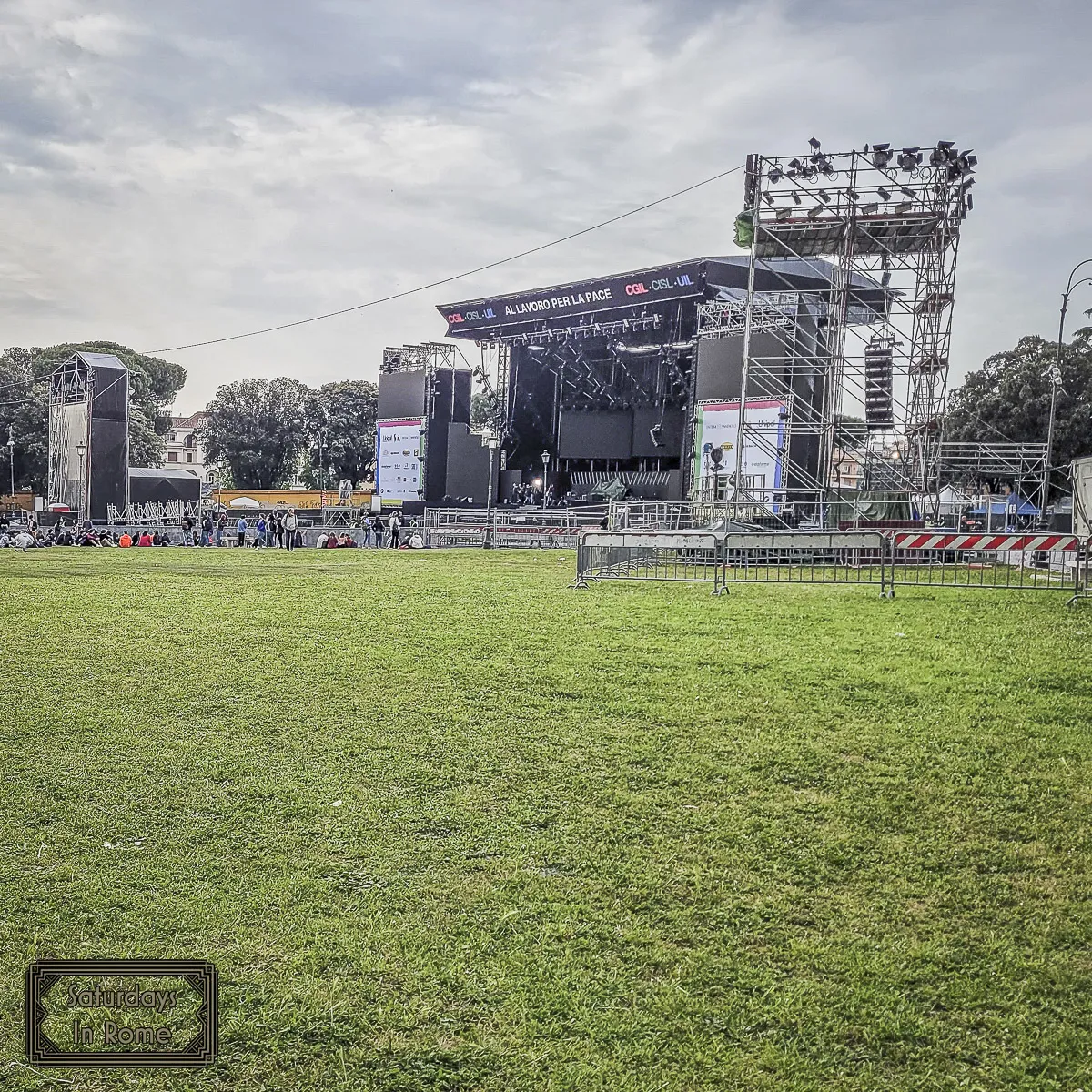
One of the fun surprises I experienced this past May was a concert held on the front lawn of the basilica. In the main square in front of the basilica on the 1st of May, there is a famous concert held annually to celebrate Workers’ Day, also known as May Day and Labor Day. In 2022, this traditional concert to celebrate Workers’ Day in Italy returned for the first time in two years because the free concert was canceled in 2020 due to the pandemic. The concert is organized by the trade unions, so it is also used as a platform to promote workers’ rights.
The Basilica Of Saint Mary Major
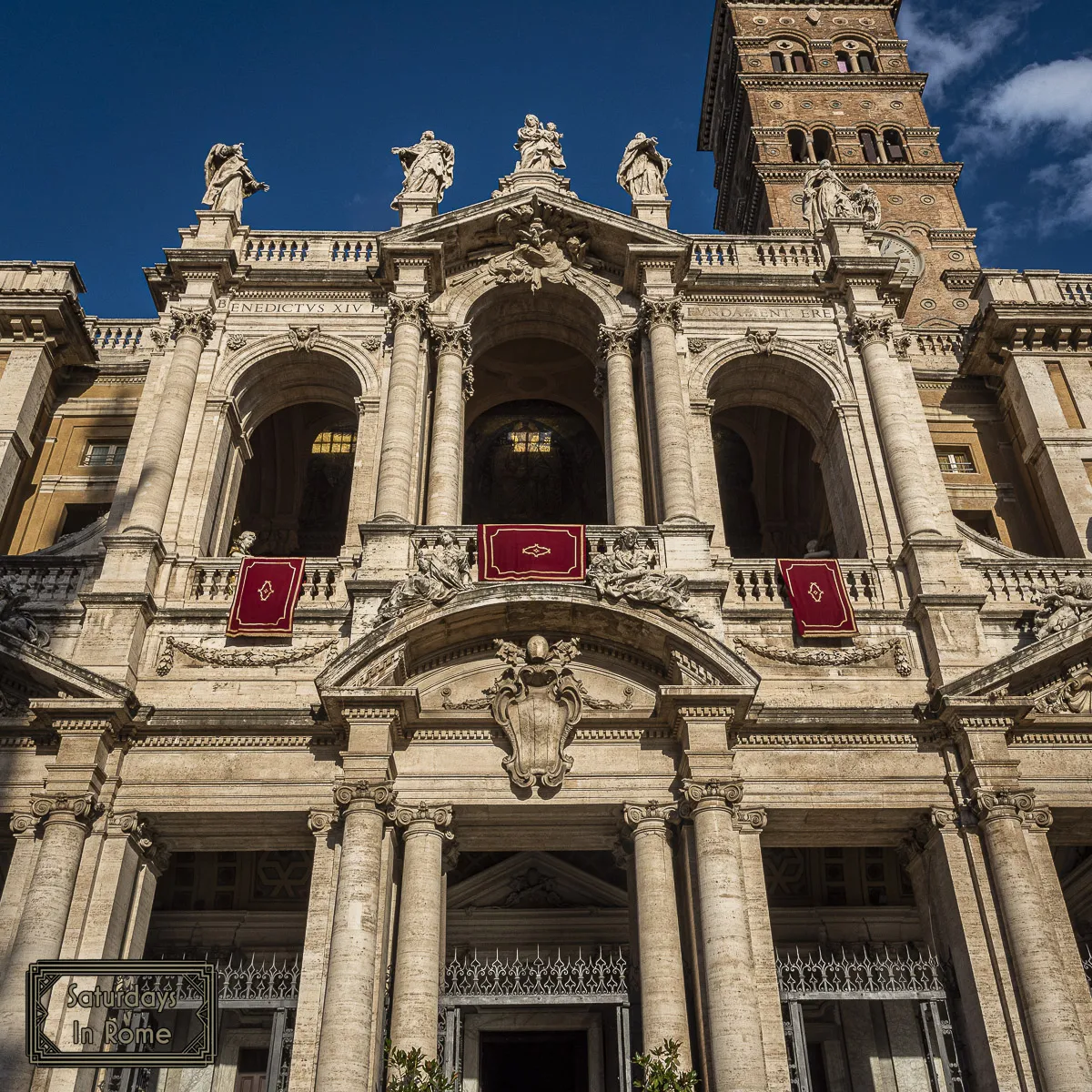
Built on the summit of the Esquiline Hill, the Papal Basilica of Saint Mary Major (Basilica Papale di Santa Maria Maggiore) is one of the four major papal basilicas in Rome (St. Peter’s Basilica, St. Johns and St. Paul are the other three), and among these basilicas, St. Mary Major is the only one to have kept its original structure, though it has been updated and expanded over the years. It is also one the seven pilgrim churches of Rome, which I’ve detailed below.
The Location Of St. Mary’s Basilica
Tradition has it that the location of the Basilica of Santa Maria Maggiore was chosen because it was the site where the Virgin Mary appeared in a dream to Pope Liberius in which she asked that the church be built in that location in her honor.
The Sistine Chapel
This is not the most famous Sistine Chapel in a Rome Basilica that you can enjoy when you visit the Vatican Museums or if you are allowed to elect a new Pope. That one was built at the request of Pope Sixtus IV around 1473. This Sistine Chapel was built at the direction of Pope Sixtus V more than 100 years later and contains his tomb.
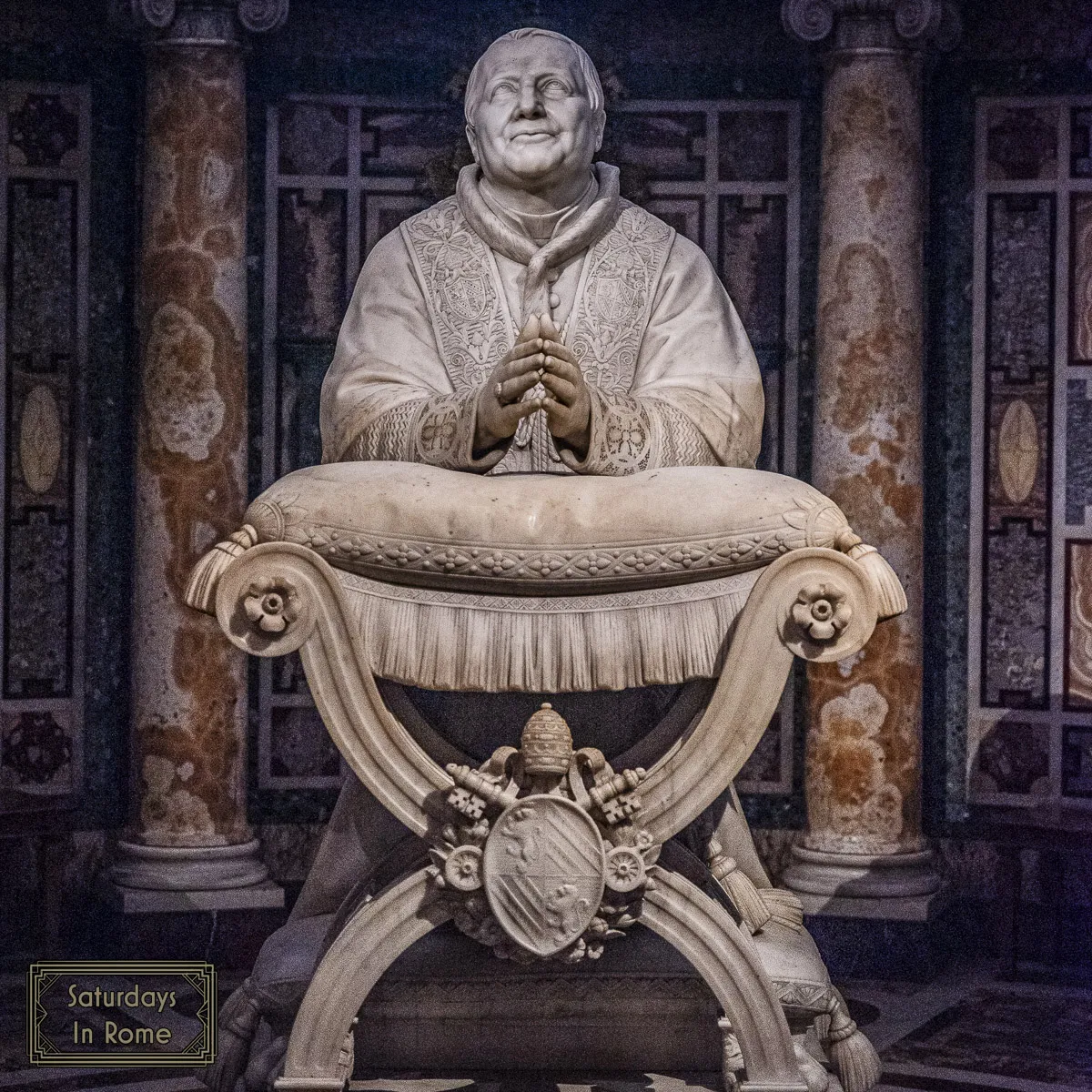
Is The Church Of Saint Mary Used By The Pope?
Since the Basilica of Saint Mary Major is a papal basilica, it is used by the pope on occasion. He presides over the annual Feast of the Assumption of Mary on Ferragosto. The canopied high altar is reserved for use by the pope alone. The pope gives charge of the basilica to an archpriest, usually a cardinal.
How To Visit The Basilica Of Saint Mary Major
If you want to visit The Basilica of Saint Mary, you are in luck because it is very centrally located at: Piazza Santa Maria Maggiore, which is only a couple of blocks from the Termini train station. You can reach Termini Station on Metro A or B at the stop named Termini. You can either walk or take the ATAC buses: #714, #360 or #649. There is also a taxi stand at Termini if the bus isn’t your style.
The Basilica Of Saint Lawrence Outside The Walls
The Basilica of Saint Lawrence Outside The Walls (Basilica Papale di San Lorenzo fuori le Mura) is one of Rome’s minor papal basilicas, as well as being one of the Seven Pilgrim Churches of Rome. It is outside of Rome’s large and historic Verano Cemetery (Cimitero del Verano) and is a shrine to its namesake, San Lorenzo.
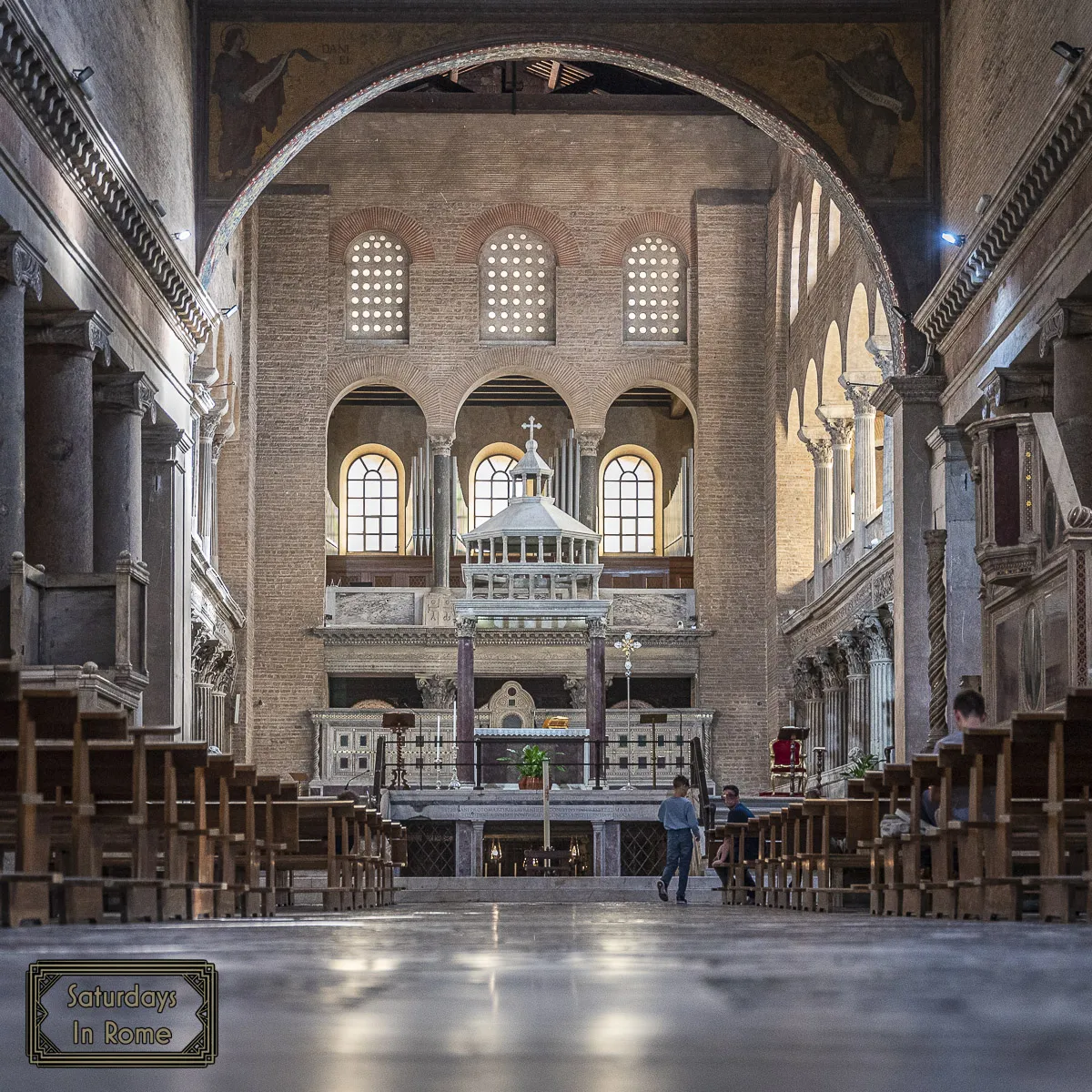
The Patron Saint Of Chefs
St. Lawrence was strapped to the top of an iron grill over a slow fire that roasted him alive. The legend is that God gave him so much strength that Saint Lawrence was able to joke with his captors while he died. In addition to chefs, it is also claimed that St. Lawrence is the patron saint of comedians, as well.
Becoming The St. Lawrence Catholic Church
An early version of the basilica was built in the 4th century by Emperor Constantine I near the tomb of the martyr Lorenzo. Major expansion began in the 13th century when this new basilica was decorated with frescoes of San Lorenzo and Saint Stephen, who was the first Christian martyr. There were continued transformations of the church through the 19th century, and in 1943, the Basilica was bombed by the Allied forces and restoration continued until 1948 with further transformation of the original structures.
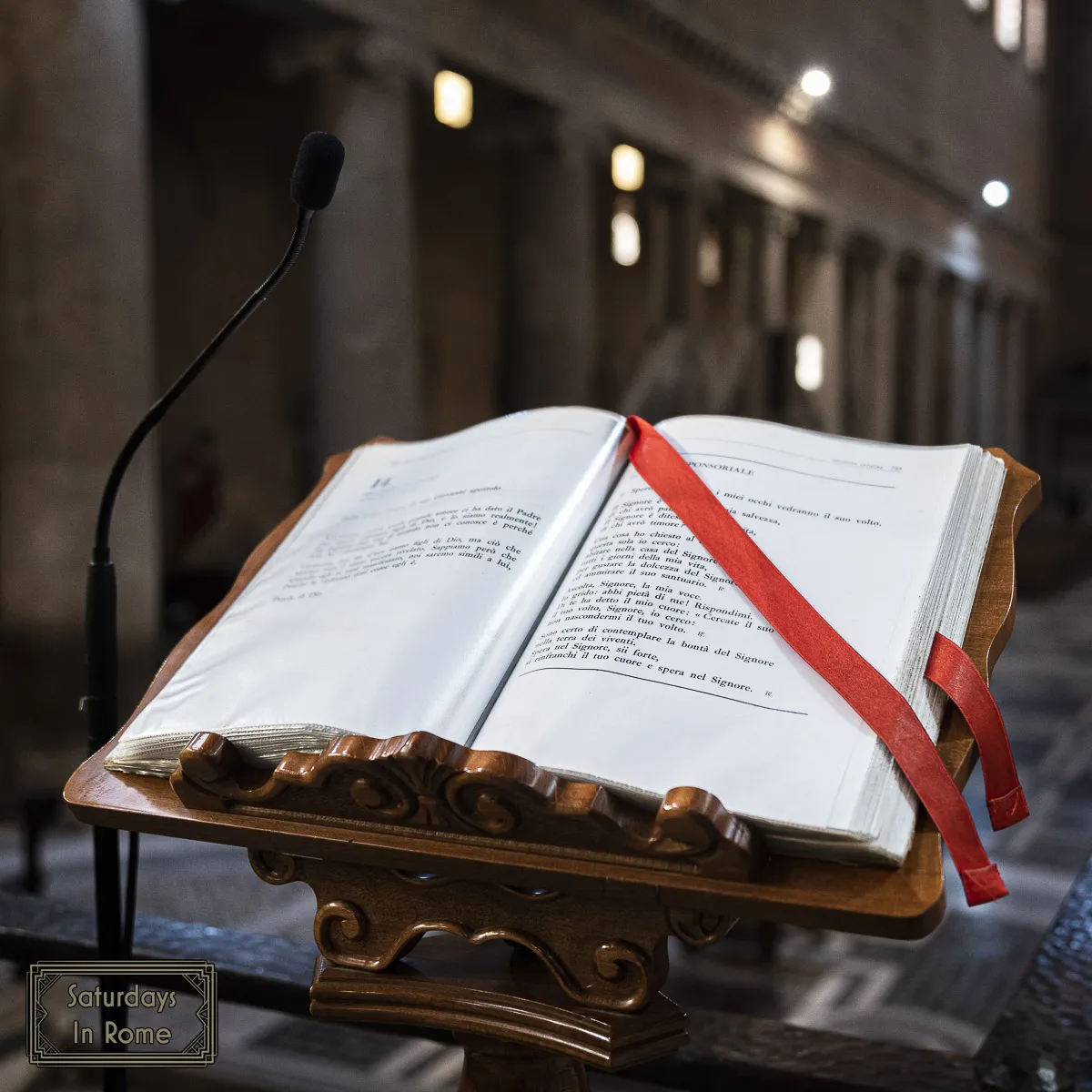
The Saint Lawrence Basilica
The central nave of the building became the part of a church reserved for the officiating clergy. To adapt it to this new function, the ancient nave, which originally coincided with the martyr’s sepulcher, was raised by 9 steps, creating space for a small decorated crypt. The wide nave is illuminated by 12 windows on each side, but the narrow aisles are almost dark because the openings are very small.
The aisles are divided by 22 columns, surmounted by Ionic capitals whose distance varies because the shafts are different from each other. There are 6 columns in Cipollino marble, and the remainder are in granite of different levels of quality. There are also inconsistent colors that range from gray to red and from white to black.
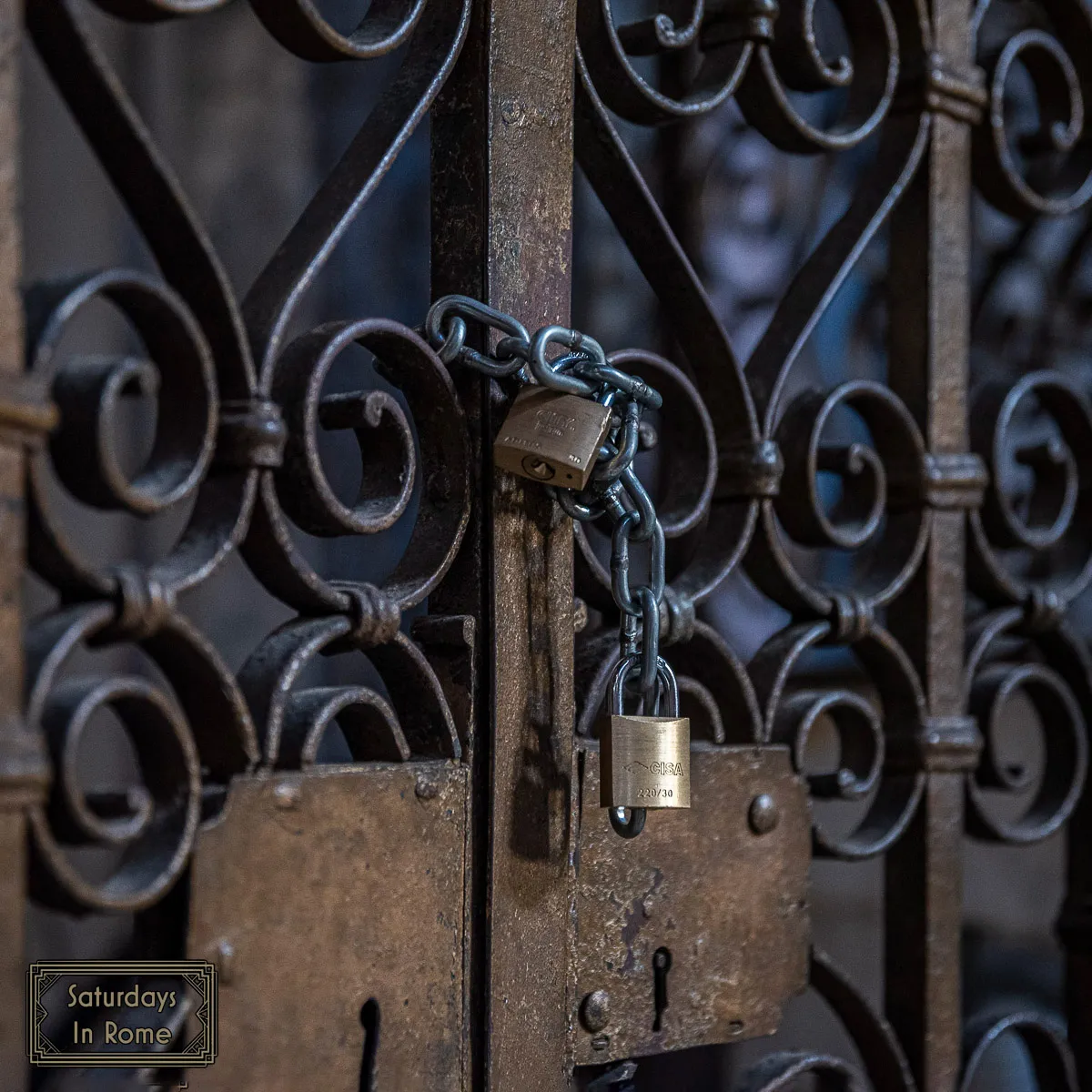
At the bottom of the left aisle there is the entrance to the Catacombs of Ciriaca, so called because they are located on the property of the Roman matron Ciriaca, in which St. Lawrence was buried, so much so that they also had the name of Catacombs of San Lorenzo. The staircase leading to the chapel and the catacombs of St. Ciriaca is decorated with bas-reliefs with the souls in purgatory.
Need Help Planning?
- Cheap Flights: Find The Most Affordable Flights.
- Accommodations: From 1 to 5 Stars And More.
- Car Rentals: Affordable Travel Across Italy.
- Sightseeing Tours: Explore Some Amazing Tours.
- Free Itinerary: Your Perfect First 3 Days In Rome
These include affiliate links.
The Basilica Of Saint Paul Outside The Walls
The Basilica of Saint Paul Outside The Walls (Basilica Papale di San Paolo Fuori le Mura) is one of Rome’s four major papal basilicas, as well as one of the Seven Pilgrim Churches of Rome. It is outside of Vatican City, but is owned by the Holy See and treated as if it is the headquarters of the diplomats of a foreign state.
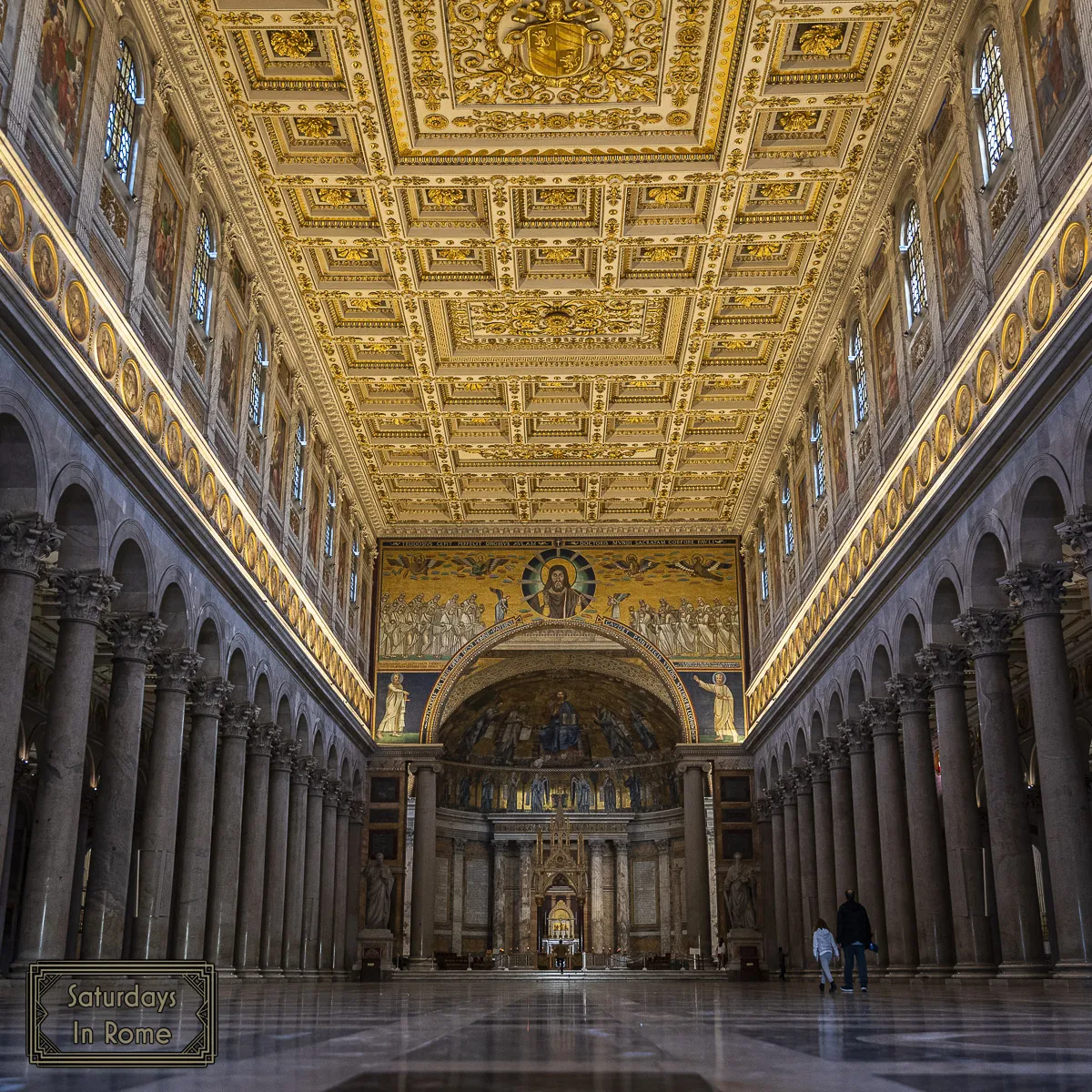
The original basilica was built over the tomb of Saint Paul in 313 AD and Pope Sylvester consecrated it in 330 AD. It was too small to handle the growing number of pilgrims visiting the basilica, so a new basilica was built in 390 AD, which at the time was the largest one in Rome.
This history of this basilica is not without its excitement. Since it is “outside the walls,” in other words outside the protective Aurelian Walls, the basilica was damaged in the 9th century during a Saracen raid. The Pope fortified the protection of the basilica, the monastery, and the peasant housing, forming the town of Johannispolis which existed until 1348, when an earthquake totally destroyed it.
In 1823, a worker repairing the copper gutters of the roof started a fire that led to the near-total destruction of this basilica, which had preserved much of its original character for 1435 years. In 1825, Pope Leo XII issued orders that the basilica be rebuilt exactly as it had been when new in the fourth century and medieval mosaics and the tabernacle also be repaired and retained.
The Quadriportico
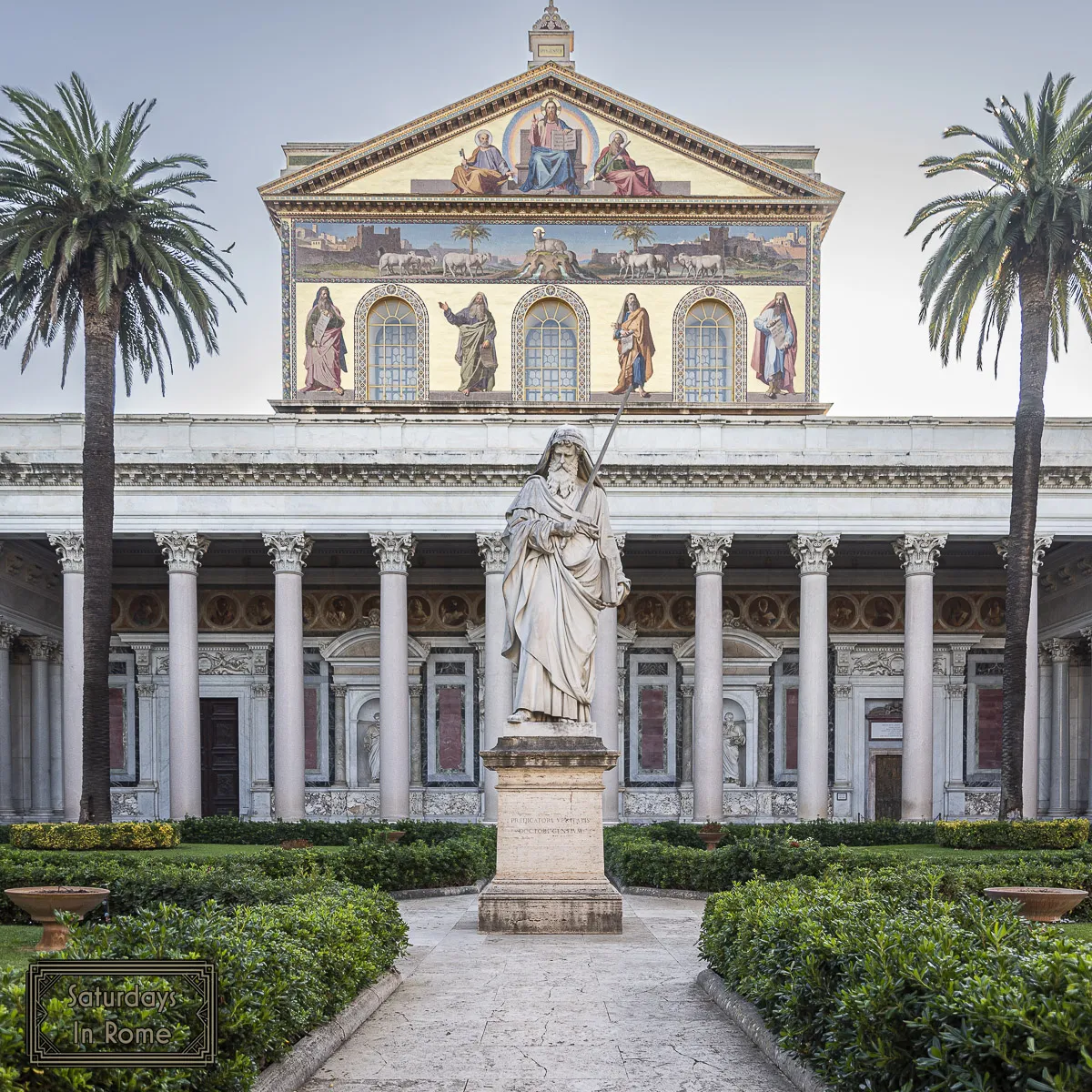
The quadriportico is a porticoed garden measuring 230 feet square surrounded by 150 columns of white granite from Montorfano, near lake Como. There is a statue in the center of the garden by Giuseppe Obici from around 1850. The statue represents St. Paul with a longsword in his right hand. representing the instrument of his martyrdom. In his left hand he holds the book of the epistles.
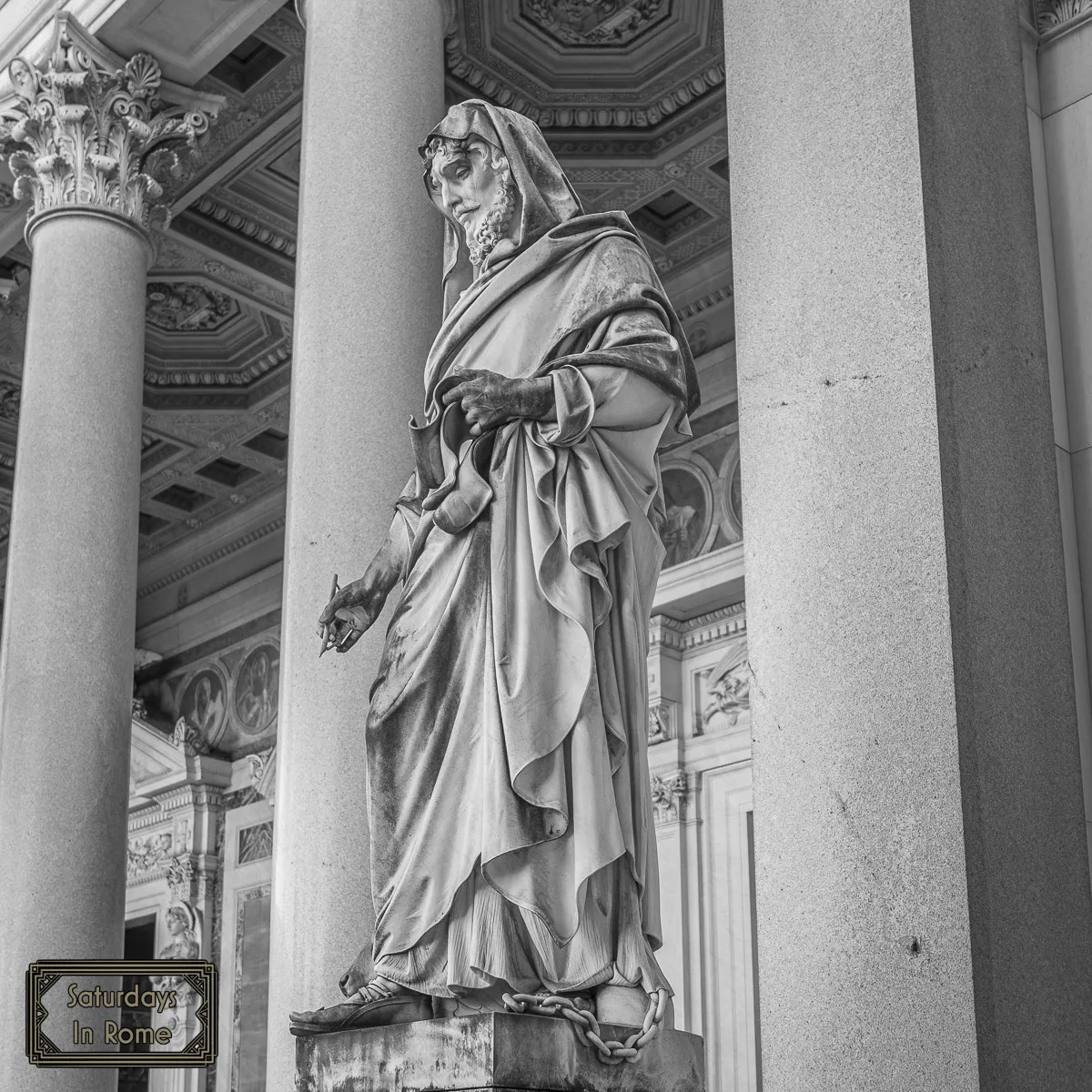
In the four corners of the garden (quadriportico) are pedestals only one of which is occupied by a statue. It is the work of Francesco Fabi-Altini (1893). It represents Saint Luke, companion of Paul and author of the Acts of the Apostles.
The Nave
The nave was really surprising to be both because of its grand scale, but also because of its emptiness. The space is more than 440 feet long, around half as wide and 100 feet high. There are two outer aisles that are separated by four rows of twenty columns made of the same Montorfano granite. There are no chairs, pews or really anything else in the center space, and only a couple of short benches along the two outer aisles.
The Basilica Of The Holy Cross In Rome
The Basilica of The Holy Cross in Rome is one of the Seven Pilgrim Churches of Rome. It is located in Esquilino, one of the districts in Rome, Italy near the Aurelian Walls and it is not far from another of the Seven Churches, the Basilica of St. John Lateran.
Relics Of The True Cross
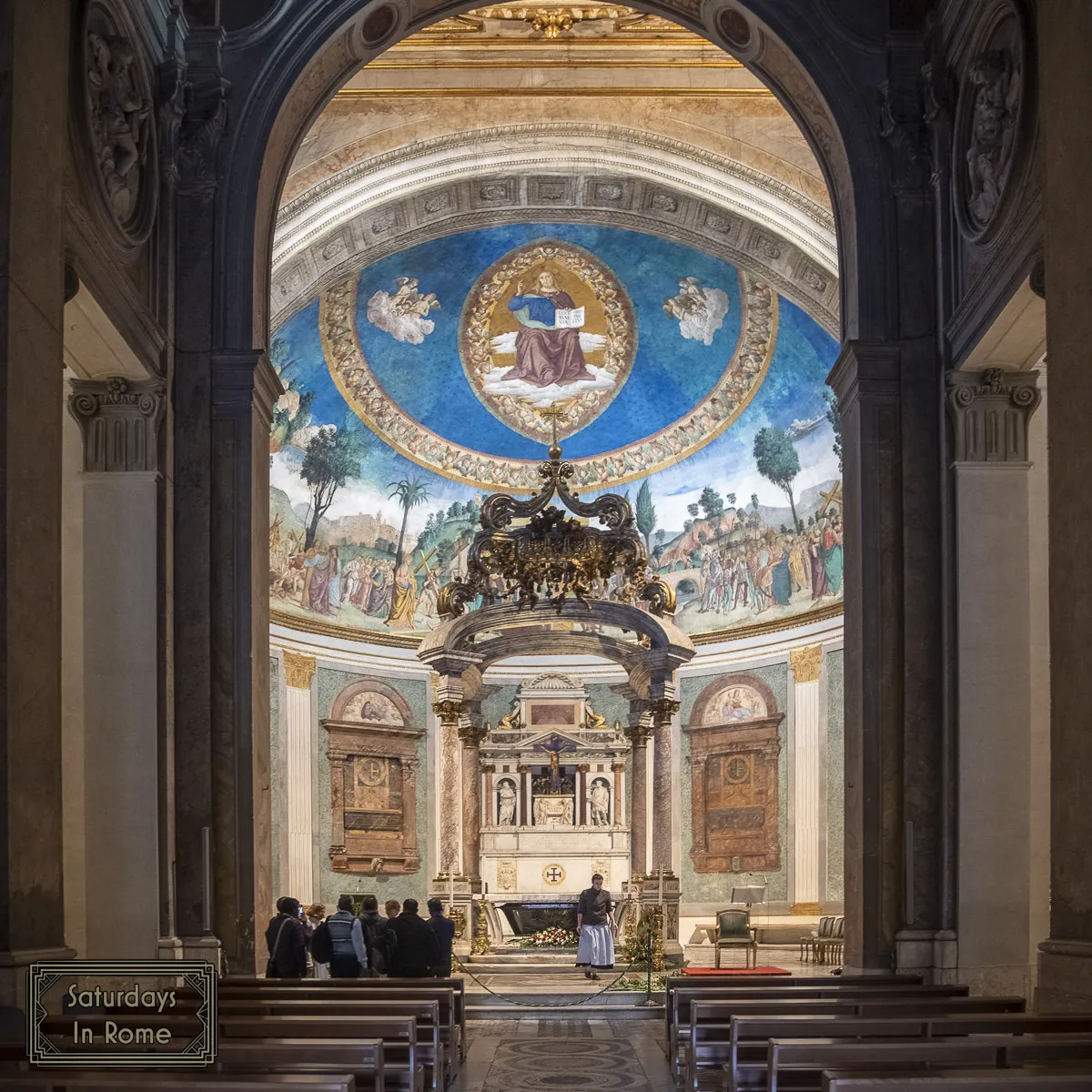
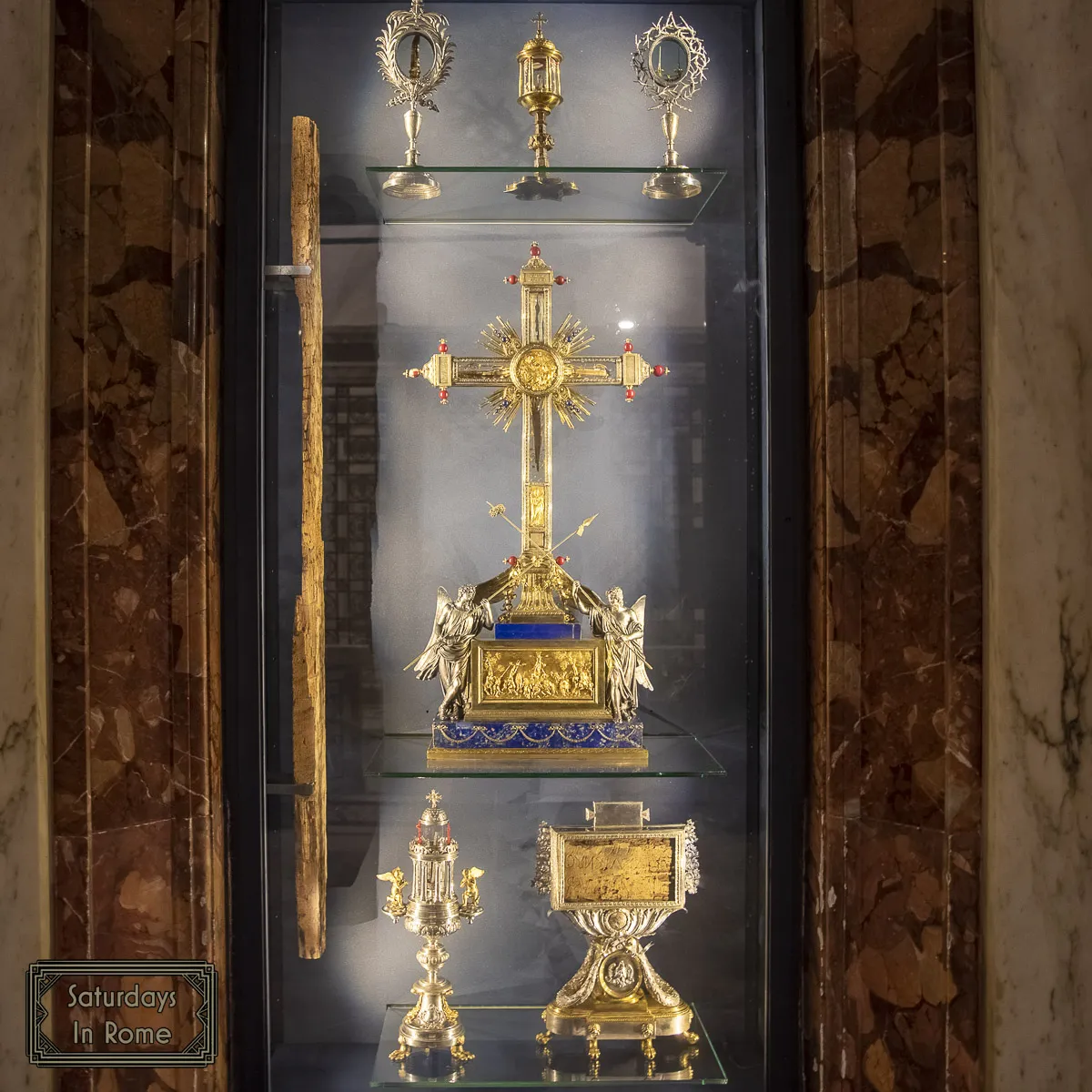
The Basilica of the Holy Cross is home to “Relics of the True Cross”, which tradition says are the fragments of the “True Cross” (the cross on which Jesus is believed to have been crucified) and one of the nails used in the Crucifixion of Jesus Christ that Saint Helen brought to Rome after her pilgrimage to the Holy Land.
In order to earn the title in Jerusalem, the basilica’s floor was covered with soil from the holy city. The basilica was considered to be “in Jerusalem” in a similar way that an embassy is considered extraterritorial, i.e. “In” the country.
Basilica Of The Holy Cross in Jerusalem Relics
The Holy Relics are small pieces from the Passion of Christ that have been preserved in gold covered reliquaries (container for relics) from the 19th century. They are protected by a glass case and displayed for the many pilgrims and visitors that come to the Basilica.
The Nennolina Story
Antonietta Meo, affectionately called “Nennolina”, was born in Rome on December 15th of the year 1930. At six years old, she was struck by osteosarcoma, forcing her left leg to be amputated. Already at that age, she had a concept of the value of suffering that was attributed to her belief in God. She is considered an inspiration because she dealt with her intense physical pain through her relationship with her higher power.
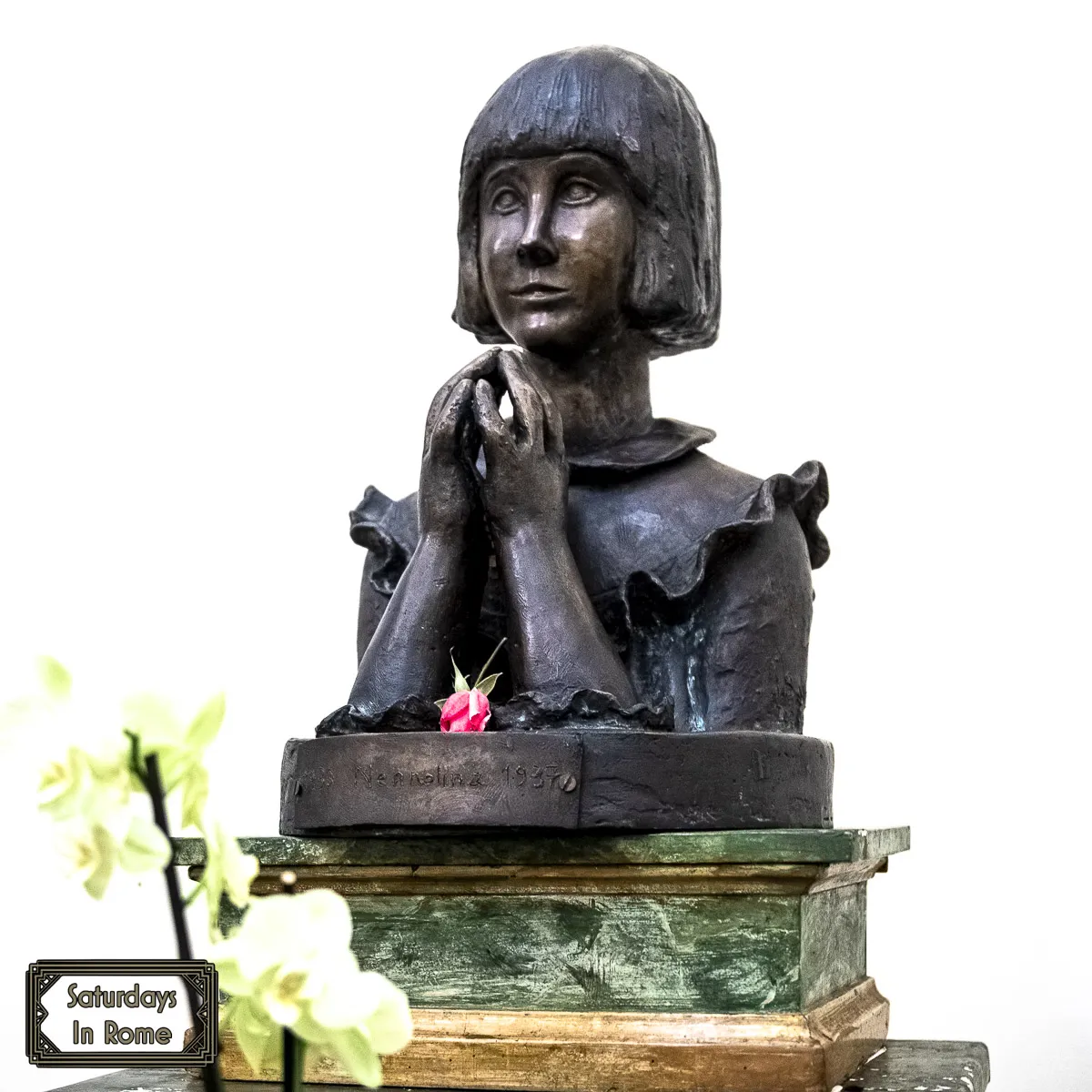
In the Basilica is the Chapel Of Antonietta Meo, which looks to contain her tomb, some clothes and toys that she may have used during her short life. The sign outside the chapel has a sign reading:
“From 5th of July 1999, the mortal remains of Antonietta Meo – “Nennolina” (12.15.1930 – 07.03. 1937) rest at the foot of the Chapel. She was a child who lived a few hundred meters from the Basilica in the Thirties and died at the age of six and a half from osteosarcoma. Her short life was so deeply marked by the mystery of the Cross that a story of ordinary pain was turned into an extraordinary one. Her 162 letters addressed to God the Father, Jesus, to the Holy Spirit and to dear Virgin Mary testify this and make little Nennolina the youngest mystic remembered by the Church.”
Need Help Planning?
- Cheap Flights: Find The Most Affordable Flights.
- Accommodations: From 1 to 5 Stars And More.
- Car Rentals: Affordable Travel Across Italy.
- Sightseeing Tours: Explore Some Amazing Tours.
- Free Itinerary: Your Perfect First 3 Days In Rome
These include affiliate links.
The Basilica Of St. Sebastian Outside The Walls
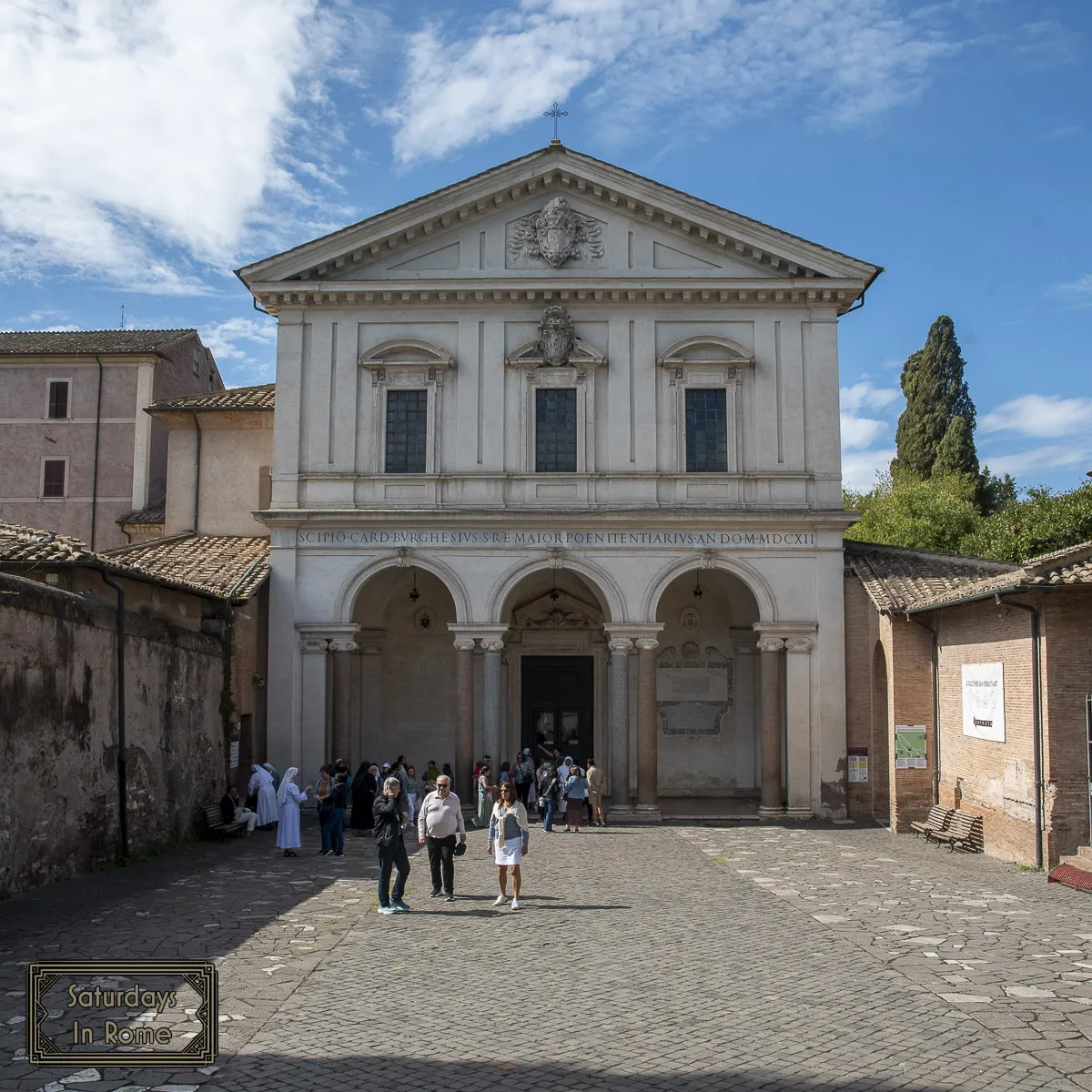
As one of the classic 7 Pilgrim Churches of Rome, the Basilica of San Sebastian Outside The Walls and the Catacombs is an inspirational site to visit.
Why Is The Basilica Of St. Sebastian Outside The Walls Significant?
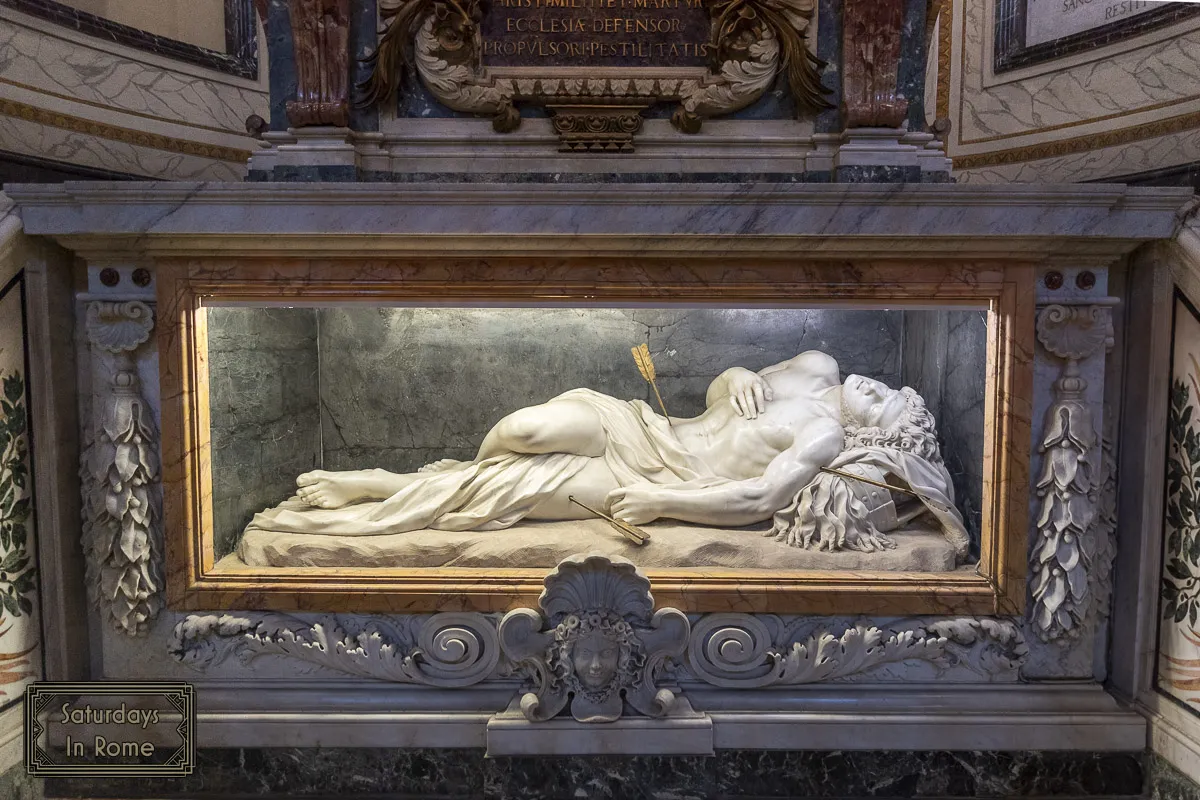
The Basilica itself, in my opinion, is actually pretty unremarkable apart from the beautiful Baroque style wooden ceiling that is worth admiring. The significance of the Basilica is in the attached catacombs. These are the largest and best known of the Christian cemeteries in Rome. The Basilica used to contain the remains of San Sebastian, but because the church lay outside the Aurelian Walls, and was at risk of being attacked, the remains were moved to St. Peter’s Basilica.
Why Are The Saint Sebastian Catacombs Famous?
The Saint Sebastian catacombs in Rome and an underground cemetery along the Appian Way outside the Aurelian Walls. The name Catacombs is claimed to have originated with these catacombs, which were originally built in a tufa excavation site. Im Greek, katà and kymbe, literally mean “close to the cavity”, which referred to the giant hole of the mine.
The history of these catacombs date back to the second century when they were used as a pagan burial site. Later they held the remains of Apostles Peter and Paul, and later San Sebastian.
Ready To Walk The Pilgrimage Yourself?
This post covers a lot of ground, literally almost 15 miles of it. If you’re ready to actually do the Seven Churches Walk, grab our complete self-guided tour guide: The Seven Pilgrim Churches of Rome.
It’s everything in this article, organized so you can use it on the go: dress code rules for every basilica, transportation options (with specific bus lines) between each stop, tips for adapting the route if you’re walking with kids or older family members, and a full map of the route, all in one PDF you can pull up on your phone.
No tour guide, no group tour markup. Just a clear plan for one of the most meaningful days you can spend in Rome.
→ Get The Complete Pilgrim Churches Guide ($28.99)
More On The Classic Seven Pilgrim Churches In Rome
If you have enjoyed this article on The Seven Pilgrim Churches In Rome and you would like more information, you may find these individual posts and hidden gems interesting and worthy of a visit as well:
- Top Sites to See in Rome: Our Complete Guide.
- The Roman Colosseum: An Icon of The Ancient World.
- Exploring Rome Parks: A Guide to the City’s Greenspaces.
- Exploring The Great Churches of Rome One Altar At A Time.
- Understanding Rome’s Neighborhoods For The First Time Visitor.
- The Beautiful Rome Fountains You Must See On Your Next Visit.
- Egyptian Obelisks In Rome Need To Be On Your Itinerary.
- Modern Sites In Rome: Contemporary Sites Worth Visiting.
- Ancient Sites In Rome – Exploring the Most Important Sites.
- Beautiful Places In Rome, Italy That Shouldn’t Be Missed.
- Bad Tourist Behavior In Italy Needs To Be Avoided By All.
- Finding The Basilica of Saint Lawrence Outside The Walls.
- The Basilica of Saint Mary Major.
- The Enduring History Of The Basilica Of St. John Lateran.
- The Papal Basilica of St. Paul Outside the Walls.
- The Basilica Of The Holy Cross In Rome Needs To Be Seen.
- The Vatican And St. Peter’s Basilica Shouldn’t Be Missed.
- The Basilica Of St. Sebastian Outside The Walls (Classic)
- The Sanctuary of Our Lady of Divine Love In Rome, Italy. (Optional)